

.svg)
How Much Does
PPF Cost?
What paint protection film really costs in 2026 — by coverage area and vehicle — plus whether PPF is worth it and where BGI's pricing fits.

Quick answer: How much does PPF cost? In 2026, paint protection film typically runs $600–$1,500 for partial front coverage, $1,500–$3,500 for a full front end, and $4,000–$8,000+ for a full vehicle in the U.S. At BGI Tint in Sacramento, full-front PPF is $1,899 and includes free ceramic coating.
Below you'll find verified 2026 U.S. price ranges for paint protection film by coverage area, what drives the price up or down, how long PPF actually lasts, and an honest look at whether it's worth it — plus exactly where BGI Tint's Sacramento pricing fits.
How Much Does PPF Cost?
The honest answer is that PPF cost depends almost entirely on how much of the car you cover — and after that, on the film brand and the size and complexity of your vehicle. Paint protection film (PPF), sometimes called “clear bra,” is a thick, clear urethane film that takes rock chips, scratches, and road rash so your factory paint doesn't have to.
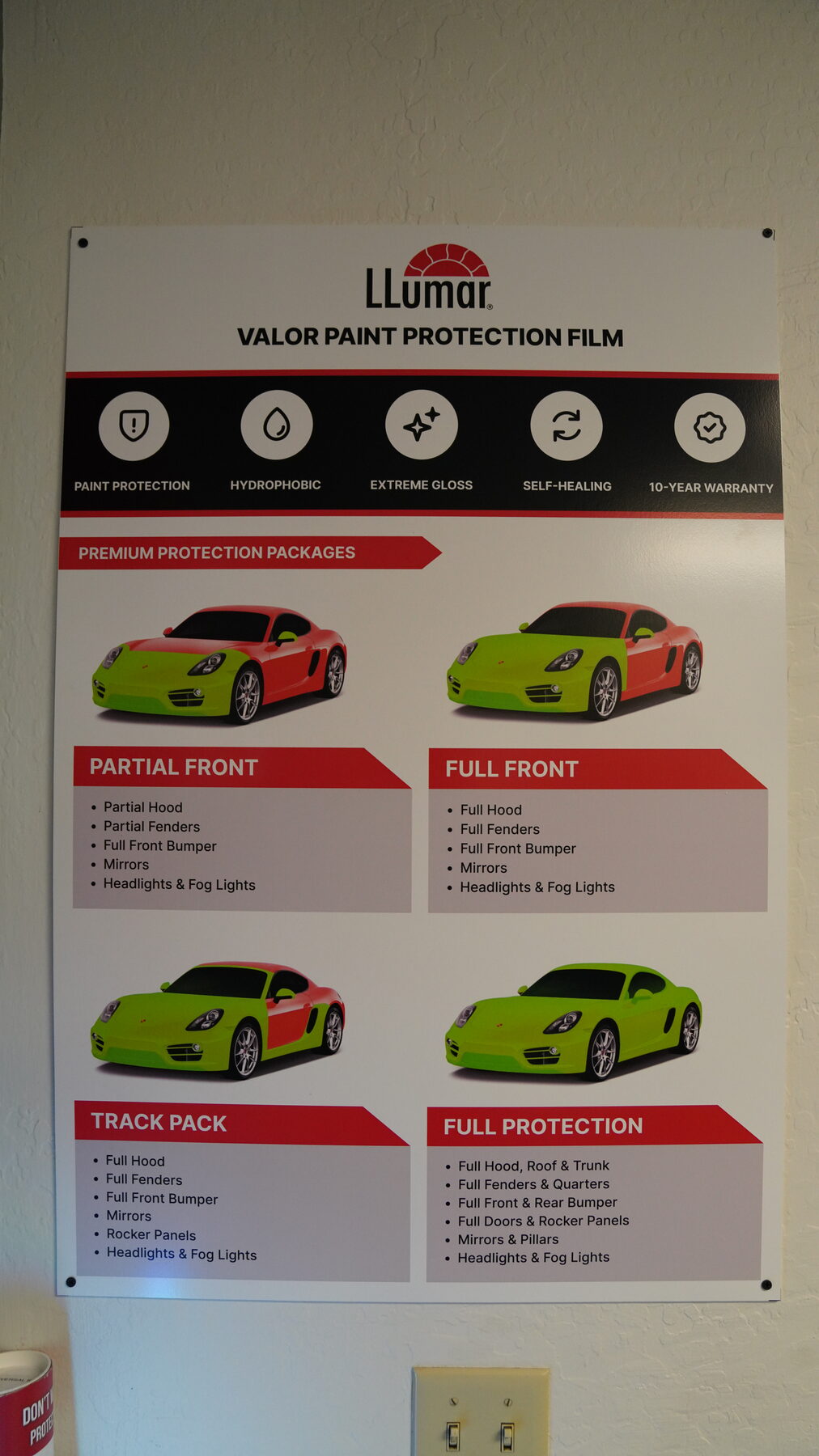
Across the U.S. in 2026, prices break down by coverage like this:
- Partial front: ~$600–$1,500
- Full front: ~$1,500–$3,500
- Track pack: ~$2,000–$3,500
- Full vehicle: ~$4,000–$8,000+
Here's the same picture in one table, with what each level actually covers.
| Coverage | What it protects | Typical U.S. price (2026) |
|---|---|---|
| Partial front (“chip kit”) | Hood leading edge (front 18–24”), front bumper, side mirrors | $600–$1,500 |
| Full front | Full hood, full fenders, front bumper, mirrors, headlights | $1,500–$3,500 |
| Track pack | Full front plus rocker panels, A-pillars, and high-impact zones | $2,000–$3,500 |
| Full vehicle | Every painted panel — doors, roof, pillars, rear bumper | $4,000–$8,000+ |
| Full vehicle + ceramic topper | Full wrap plus a ceramic coating over the film | $6,000–$10,000+ |
Sources: Aaron's Automotive Detailing, Xtreme Detailing.
A quick note on numbers: the ranges in this guide are verified U.S. market averages from independent 2026 sources. BGI Tint's actual Sacramento pricing is listed separately and clearly labeled near the end.
PPF Cost by Coverage Area
You don't have to wrap the whole car. Most drivers protect the front end — where 90% of road damage lands — and stop there. Here's how each tier works.
Partial Front (the “chip kit”) — $600–$1,500
This covers the highest-impact zones: the leading edge of the hood, the front bumper, and the mirrors. It's the budget entry point and stops the chips that bug most people without wrapping panels that rarely get hit. The trade-off is a visible film edge partway up the hood, though a good installer places it along a natural body line.
Full Front — $1,500–$3,500
The most popular package, and for good reason. It wraps the entire hood, both front fenders, the full bumper, the mirrors, and usually the headlights — so there's no mid-hood edge line and no unprotected gap behind the chip kit. For a daily-driven car, full front is the sweet spot of coverage versus cost (Aaron's Automotive Detailing).
Track Pack — $2,000–$3,500
Built for cars that see highway miles or track days. It adds rocker panels, A-pillars, and the roof's leading edge to a full-front layout — the spots that catch debris kicked up at speed (Xtreme Detailing).
Full Vehicle — $4,000–$8,000+
Every painted surface gets wrapped. This is the maximum-protection option (and the most popular choice for exotics, collectibles, and leased cars where you want the paint flawless at turn-in). Add a ceramic topper over the film and the total climbs to roughly $6,000–$10,000+.
Vehicle size also moves the number. A compact sedan sits at the low end of any range, while large SUVs, trucks, and exotics cost more because they have more square footage and more complex curves to wrap. Independent guides put sedans around $1,500–$5,000 and SUVs/trucks around $2,000–$6,500 for fuller coverage (Aaron's Automotive Detailing).
What Affects PPF Price
Two quotes for “paint protection film” can differ by thousands of dollars. Here's what's actually behind the number:
- Film brand and quality. Name-brand films from manufacturers like STEK, XPEL, and 3M cost more than generic film — but they self-heal better, resist yellowing longer, and carry real warranties (Aaron's Automotive Detailing).
- Vehicle size and complexity. More panels and tricky curves (deep bumper contours, frameless mirrors, big SUV hoods) take more film and more labor hours.
- Coverage area. This is the biggest lever — partial front vs. full front vs. full vehicle, covered above.
- Finish: gloss vs. matte. Standard PPF is optically clear and glossy. A matte (satin) film that turns glossy paint into a stealth finish usually costs a premium over the same brand's clear film.
- Installer skill and shop environment. PPF is cut, stretched, and wrapped around edges by hand. A clean, climate-controlled bay and an experienced installer produce tucked edges and no lifting — craftsmanship you're paying for.
- Paint prep. The paint has to be decontaminated (and sometimes lightly corrected) before film goes on, or you'll seal in swirls. Existing damage that needs correction adds to the bill.
Is Paint Protection Film Worth It?
For most people who plan to keep — or resell — their car, yes. PPF is the only product that physically stops a rock chip before it reaches the paint. Wax and even ceramic coating add gloss and make cleaning easier, but neither stops a stone at 70 mph. The real question is whether the upfront cost beats the cost of fixing the damage later.
Here's the math that usually settles it: a professional rock-chip touch-up runs about $100–$300, repainting a single chipped hood runs $150–$2,000 (most quality jobs land $500–$1,000), and a full respray runs $3,000–$10,000+ — and a repaint is never truly “factory” again (Apex Auto Pros — paint chip repair, CarXplorer — hood repaint). A full-front PPF install protects the exact panels that get hit, for a one-time cost in the same ballpark as a single quality repaint.
| Pros — why PPF is worth it | Cons — the honest trade-offs |
|---|---|
| Physically stops rock chips, scratches, and road rash before they reach paint | Higher upfront cost than wax or a sealant |
| Self-healing top coat erases swirls and light scratches with heat | Full-vehicle coverage is a real investment ($4,000+) |
| Protects resale value — factory paint stays original and chip-free | A clean result needs a skilled installer; DIY rarely looks right |
| Cheaper than repainting a chipped hood ($500–$1,000+) or a full respray ($3,000–$10,000+) | Cheap, low-grade film can yellow or haze — brand matters |
| Quality film resists yellowing and staining; warranties run 5–12 years | Won't stop everything — a hard impact can still dent the panel |
| Invisible glossy finish (matte options available) keeps the car looking stock | Edges must be wrapped properly or bargain installs may lift |
Does paint protection film work? Yes — independent guides and film makers agree it shields against highway sand and stone chips, parking-lot door dings and scuffs, and bug and road-trip grime, all while staying clear (UPPF USA). It isn't magic armor — a serious impact can still dent metal — but for chips, scratches, and staining, it does exactly what it claims.
How Long Does PPF Last?
Quality paint protection film lasts 5 to 10 years, and premium films routinely perform well past a decade with proper care (Aaron's Automotive Detailing, SoFlo Suds PPF cost guide). That lifespan is backed by manufacturer warranties, which is where the brand you choose really matters:
- Entry-level / generic film: ~5-year warranties
- Mid-tier film: 8–10-year warranties
- Premium film (STEK, XPEL, top 3M): 10–12-year warranties against yellowing, hazing, cracking, and peeling
PPF is built from thermoplastic polyurethane (TPU) — a thick, flexible urethane layer with a clear self-healing top coat (UPPF USA). Quality TPU film resists discoloration; cheaper PVC- or TPH-based films are the ones that haze and yellow faster under UV and heat (UPPF USA — TPU vs TPH vs PVC). In a high-UV market like Sacramento, that difference is exactly why brand and warranty are worth paying for.
Does PPF self-heal? Yes, on quality film. The top coat is engineered with elastomeric polymers that “remember” their smooth state — light swirls and fine scratches flow back out when the film warms up, whether from the sun, warm water, or a heat gun. Deep cuts that go through the top coat won't heal, but everyday swirl marks vanish.
Does PPF Damage Paint?
No — on a quality film with a proper install, PPF protects paint rather than harming it. The film bonds to the clear coat with an optically clear adhesive designed to come off cleanly.
When it's time to replace aged film, a trained installer warms it and peels it off; the film lifts away without pulling your paint with it, and any light adhesive residue cleans up — occasionally a quick polish is all that's needed afterward (Aaron's Automotive Detailing). The risks people worry about — paint lifting, staining, glue left behind — come from cheap film or careless removal, not from PPF as a product. One caveat: film should go on factory or fully cured paint. If a panel was recently repainted, let it cure fully before wrapping it.
PPF Cost vs Ceramic Coating
These two get compared constantly, and the short version is: they solve different problems, and the best setups use both.
- PPF is physical armor. It's thick urethane that absorbs rock chips and scratches. It costs more, but it's the only option that stops impact damage.
- Ceramic coating is a thin, hard chemical layer that bonds to paint (or over PPF). It adds deep gloss, makes water bead and dirt rinse off, and blocks UV fade — but it won't stop a rock chip. It's far cheaper than PPF.
That's why many drivers wrap the high-impact front end in PPF and ceramic-coat the rest of the car: chip protection where debris hits, easy-clean gloss everywhere. For a full side-by-side, see our guide on PPF vs. ceramic coating, and if you're new to coatings, start with what is ceramic coating?.
Paint Protection Film Pricing at BGI Tint in Sacramento
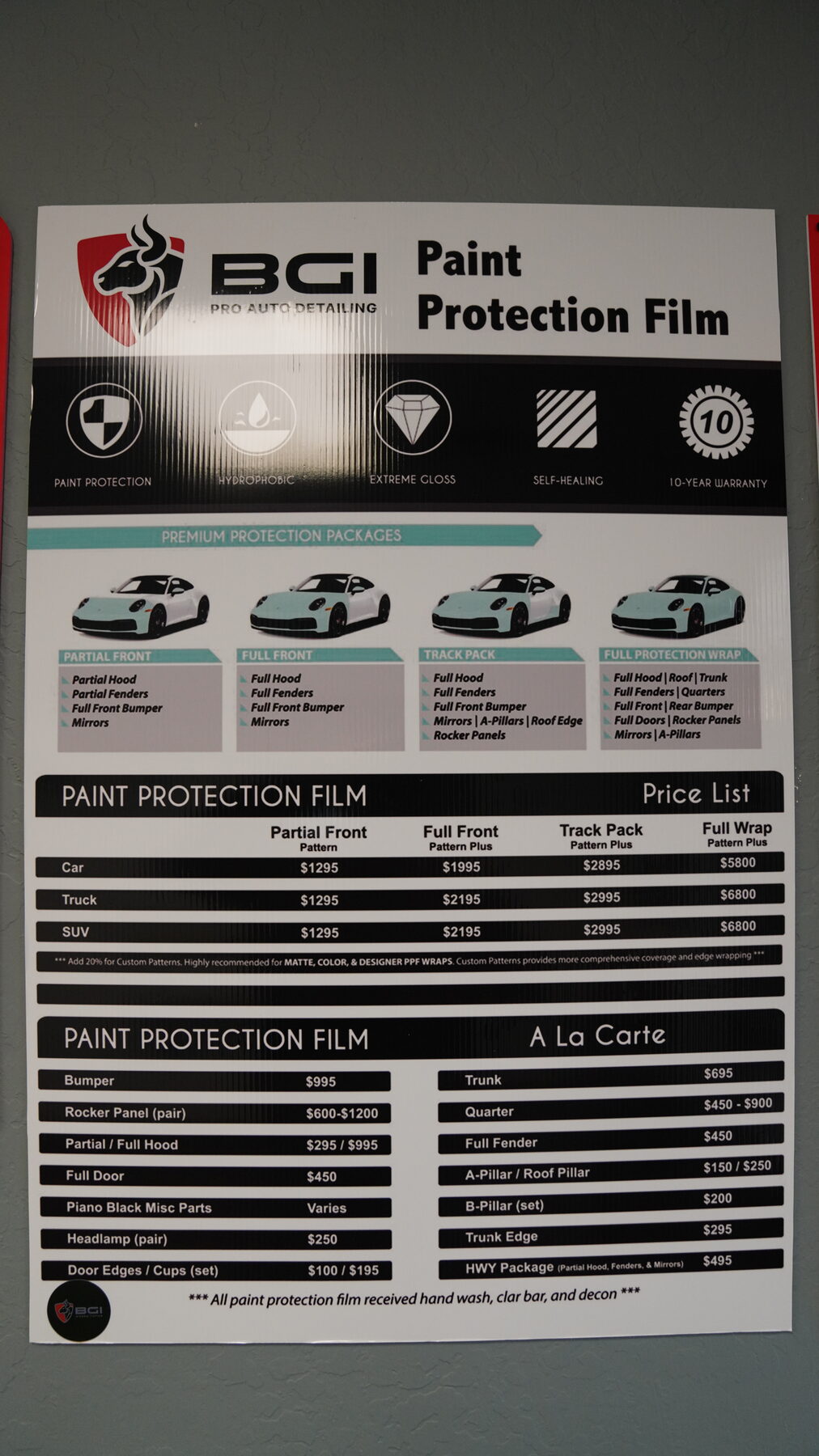
Here's where BGI Tint fits the market — these are our current Sacramento prices, listed separately from the U.S. averages above.
In our Sacramento shop, our most popular package is full-front PPF for $1,899 — and it includes a free ceramic coating. Compare that to the verified U.S. full-front range of $1,500–$3,500, and the free ceramic on top, and it's one of the strongest values in the Tri-County area.
Our current Sacramento PPF offer:
- Full-front PPF: $1,899, with free ceramic coating — hood, fenders, bumper, and mirrors
- 12-year STEK PPF warranty against yellowing, cracking, and peeling
- Authorized dealer for STEK paint protection film, plus Rayno and Carlas PPF options
- Self-healing, optically clear film that protects against rock chips, scratches, and road rash
- Partial-front, track-pack, and full-vehicle coverage also available — ask for a custom quote
Starting / promotional pricing.
We're locally owned, based in Roseville, and we serve the Tri-County area: Sacramento, Placer, and El Dorado counties. Our installs happen in a clean, controlled bay with edges wrapped properly so the film doesn't lift — the craftsmanship that separates a quality clear bra from a bargain one. Shop owner Vadym Bugai personally oversees quality on every car.
- Trust signals: 4.9★ with 380+ Google reviews, same-day appointments, free quotes, and a comfortable lounge while you wait.
Related Guides
Core protection guides:
- PPF vs. ceramic coating — which paint-protection option is right for your car
- What is ceramic coating? — how ceramic paint coatings work and what they protect
- Window tint cost in Sacramento — 2026 tint price guide
- Ceramic tint vs. regular tint — performance and price compared
- California window tint laws — legal VLT limits, fines, and exemptions
More PPF guides:
- Full front vs full car PPF — how much coverage you actually need
- Partial front PPF cost — the budget "chip kit"
- How much does PPF cost for a Tesla?
- Matte PPF cost — satin film, and is it worth it
- XPEL vs STEK vs 3M PPF — top film brands compared
- How long does PPF last? — and does it yellow
- Does PPF damage paint? — and how it's removed
- Is PPF worth it on a used car?
Ready to protect your paint? See our Sacramento PPF service page.
Get a Free Quote
Want an exact PPF price for your car? Get a free, no-obligation quote from BGI Tint — same-day appointments are often available, and we'll recommend the right coverage and film for your vehicle and budget.
- See PPF packages: bgitint.com/services/paint-protection-film-wrapping
- Call us: (916) 460-9257
- Free quotes • Same-day appointments • Based in Roseville • Serving Sacramento, Placer & El Dorado counties
Written by BGI Tint • Reviewed by Vadym Bugai, owner & installer
Sources:
- Aaron's Automotive Detailing — How Much Does PPF Cost? 2026 Full Pricing Guide
- Xtreme Detailing — How Much Does Paint Protection Film Cost?
- SoFlo Suds — PPF Cost Guide 2026
- UPPF USA — TPU Paint Protection Film Guide (self-healing, yellowing)
- UPPF USA — TPU vs. TPH vs. PVC Paint Protection Film
- Apex Auto Pros — Paint Chip Repair Cost (2025)
- CarXplorer — Hood Repaint Cost 2026 Price Guide
How much does PPF cost?

How much is full front PPF?
Is paint protection film worth it?
How long does paint protection film last?
Does PPF self-heal?
Does PPF turn yellow?
Does PPF damage paint?
Does paint protection film work?
PPF or ceramic coating — which should I get?
Do you offer free PPF quotes in Sacramento?
Security film can delay entry and increase the effort or noise required, but it cannot guarantee that a determined intruder will never create an opening.
A written inspection-based estimate is more reliable than a single advertised average.
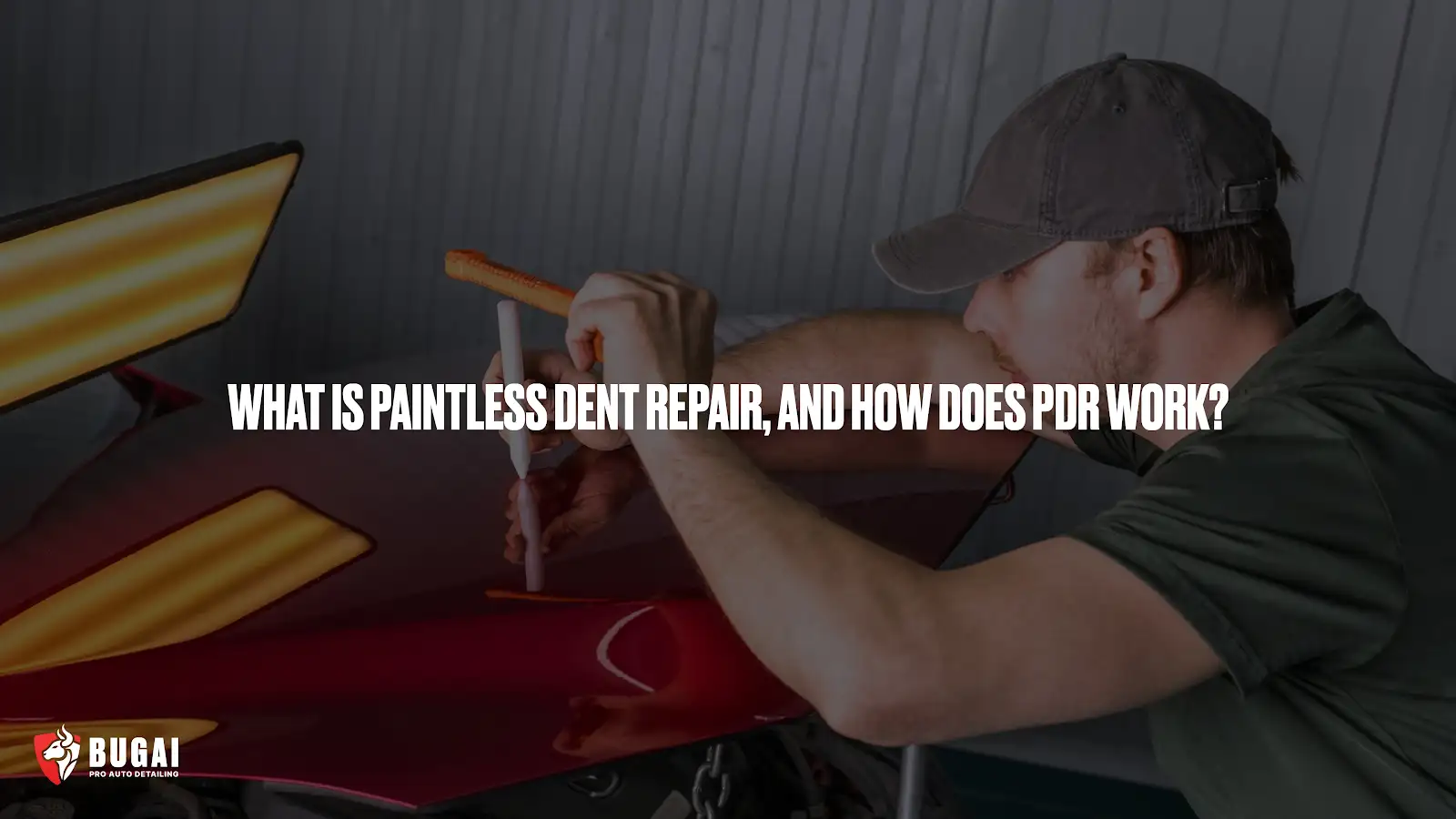
Paintless dent repair, or PDR, is a method of reshaping a dented metal panel without conventional body filler and repainting when the existing finish remains suitable.


