PPF vs Ceramic Coating:
Which Wins?
PPF stops rock chips and self-heals; ceramic adds gloss and easy cleaning. Here's how they compare on protection, cost, and longevity.

Quick answer: In the PPF vs ceramic coating debate, PPF (paint protection film, or “clear bra”) wins on physical protection — it's a thick, self-healing film that absorbs rock chips and scratches. Ceramic coating is a thin chemical layer that adds gloss, UV protection and a hydrophobic, easy-clean finish. They solve different problems, and the best setups use both.
If you're trying to choose between a clear bra and a ceramic coating for your car, this guide breaks down exactly what each one does, where each falls short, what they cost, and how to combine them — with real prices and BGI Tint's Sacramento pricing clearly labeled at the end.
PPF vs Ceramic Coating: The Quick Verdict
Here's the whole comparison in one table. The single most important difference: PPF is a physical barrier that absorbs impacts, while ceramic coating is a chemical barrier that repels contaminants. One stops rock chips; the other makes your paint glossier and easier to clean.
| PPF (Clear Bra) | Ceramic Coating | |
|---|---|---|
| What it is | Thick, flexible urethane (TPU) film | Thin liquid polymer that bonds to the clear coat |
| Thickness | ~6–8 mil (~150–200 microns) | A few microns |
| Rock-chip / impact protection | ✅ Yes — its main job | ❌ No |
| Self-healing | ✅ Light scratches vanish with heat | ❌ No |
| Gloss & shine | Adds some gloss (gloss or matte options) | ✅ Deep, mirror-like gloss |
| Hydrophobic (water beading) | Moderate | ✅ Excellent |
| UV / oxidation protection | ✅ Yes | ✅ Yes |
| Chemical-etch resistance | ✅ Yes | ✅ Yes |
| Typical lifespan | ~7–10 years | ~2–5 years (premium up to ~12) |
| Typical cost | Higher (full front ~$1,200–$2,500+) | Lower (~$700–$2,300) |
Sources: Metro Restyling, Springs Detailing, UC PPF.
The short version: if your top concern is physical damage — rock chips on the highway, scratches, road debris — PPF is the answer. If you want shine, easier washing, and UV/chemical protection at a lower price, ceramic coating delivers. Many drivers ultimately want both, which we'll cover below.
What Is PPF (Clear Bra)?
Paint protection film — also called PPF or a “clear bra” — is a thick, optically clear thermoplastic polyurethane (TPU) film that's applied directly over your paint. Think of it as a transparent, sacrificial shield roughly 150 microns (about 6–8 mil) thick that takes the abuse so your factory paint doesn't (Metro Restyling).
Because it's a genuine physical layer, PPF does what no coating can:
- Absorbs rock chips and road debris before they reach your clear coat
- Resists scratches, bug splatter, and minor abrasions
- Self-heals — most quality films have a top layer where light scratches and swirl marks disappear when exposed to heat from the sun, warm water, or a heat gun (Springs Detailing)
- Blocks UV to help prevent fading and oxidation
PPF is most often applied to high-impact areas — the front bumper, hood, fenders, mirrors, and headlights (a “full-front” package) — or across the entire vehicle for maximum coverage. Premium modern films resist the yellowing that plagued older products, and they're backed by long manufacturer warranties. For a full pricing breakdown, see our guide on how much PPF costs.
What Is Ceramic Coating?
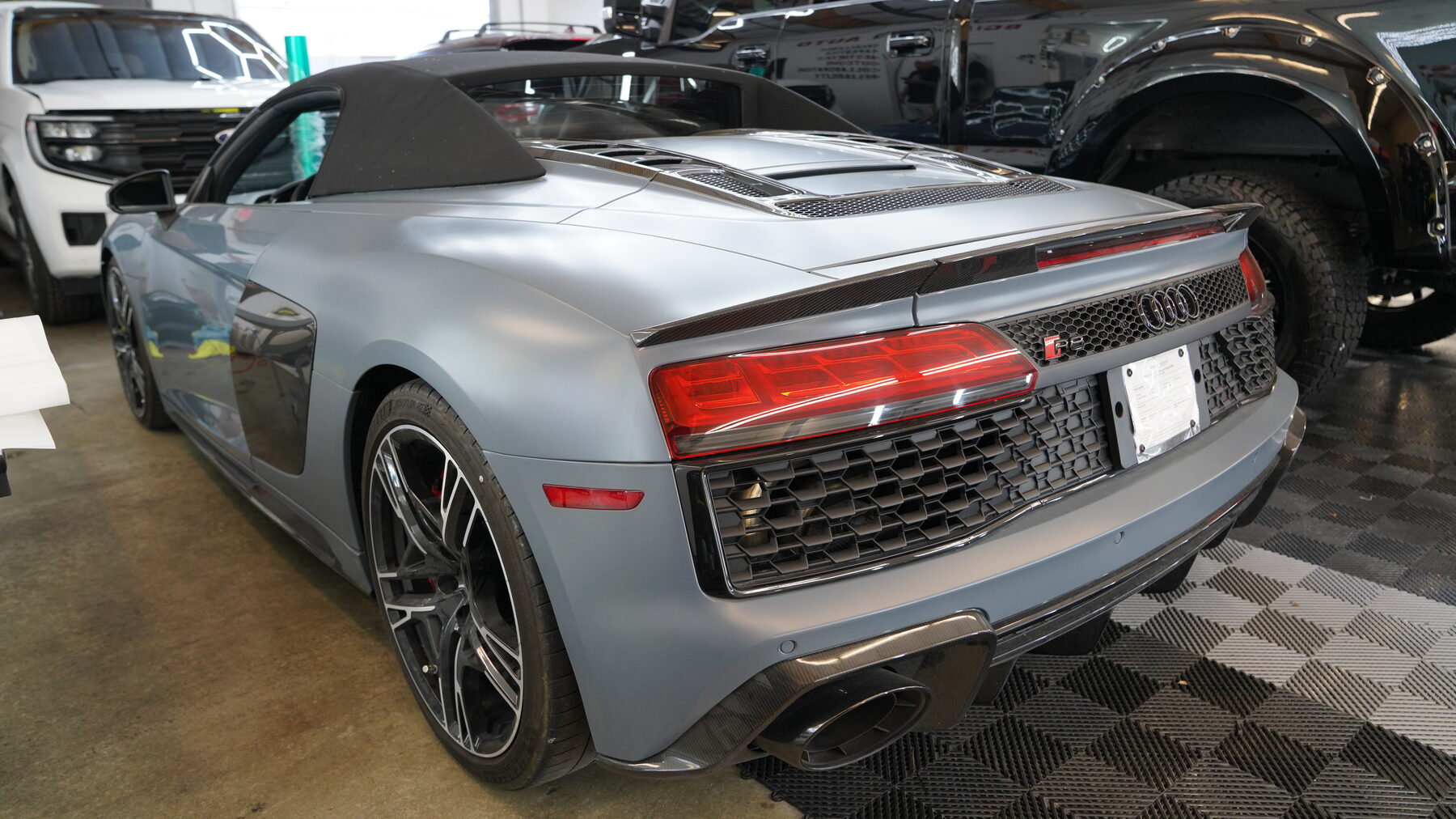
A ceramic coating is a liquid polymer — usually silica (SiO₂) based — that chemically bonds to your car's clear coat and cures into a hard, semi-permanent layer just a few microns thick. Unlike PPF, it isn't a film you can peel off; it becomes part of the surface (Metro Restyling).
What a ceramic coating does brilliantly:
- Deep, glossy shine that makes paint look wet and rich
- Hydrophobic surface — water beads up and rolls off, carrying dirt with it, so the car stays cleaner and is far easier to wash
- UV and oxidation protection to slow paint fade
- Chemical-etch resistance against bird droppings, bug acids, and water spots
- Light-scratch resistance — it reduces the swirl marks that come from washing
One honest caveat about marketing: you'll see ceramic coatings advertised as “9H hardness.” That 9H comes from a pencil-scratch test, not the Mohs mineral scale, and it does not mean rock-chip proof. A coating only a few microns thick can't absorb impact, so a stone at highway speed will still chip your paint (Precision Pro Auto Detailing, Team Nutz Technology). Learn more in our explainer on what ceramic coating is.
Head-to-Head Comparison: PPF vs Ceramic Coating
Now let's go deeper than the quick verdict and compare PPF vs ceramic coating across every factor that matters when you're spending real money.
| Factor | PPF (Clear Bra) | Ceramic Coating | Winner |
|---|---|---|---|
| Rock-chip & impact protection | Absorbs stone chips and road debris | None — chemical layer doesn't absorb impact | PPF |
| Scratch / swirl resistance | Self-heals light scratches with heat | Reduces wash swirls; can't self-heal | PPF |
| Gloss & shine | Adds gloss; gloss or matte finishes | Deepest, mirror-like wet look | Ceramic |
| Hydrophobic / self-cleaning | Moderate beading | Excellent water beading and sheeting | Ceramic |
| UV & oxidation protection | Yes | Yes | Tie |
| Chemical-etch resistance | Yes | Yes (bird droppings, bug acids, water spots) | Tie |
| Ease of cleaning | Easier than bare paint | Easiest — dirt struggles to stick | Ceramic |
| Longevity | ~7–10 years | ~2–5 years (premium up to ~12) | PPF |
| Coverage | Usually high-impact panels or full body | Whole vehicle in one application | Ceramic |
| Upfront cost | Higher | Lower | Ceramic |
| Best for | Impact & long-term paint protection | Shine, gloss & easy maintenance | Depends |
Sources: Springs Detailing, UC PPF, Team Nutz Technology.
Notice that this isn't a knockout for either side. PPF wins decisively on physical protection and longevity; ceramic wins on shine, hydrophobics, ease of cleaning, full-vehicle coverage, and price. They protect against different threats — which is exactly why combining them is so popular.
Can You Use PPF and Ceramic Coating Together?
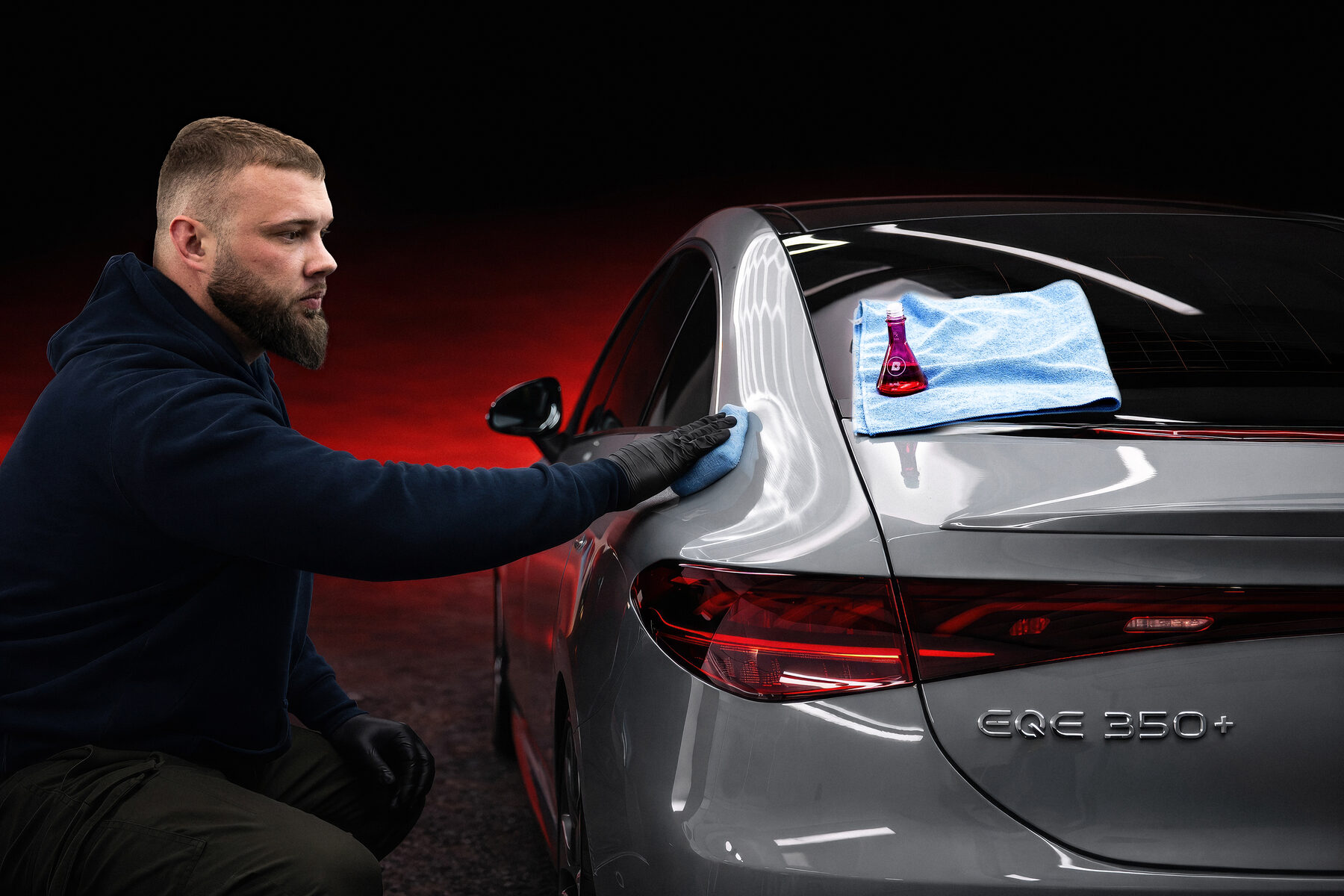
Yes — and for many drivers it's the ideal setup. PPF and ceramic coating aren't rivals so much as teammates, because each covers the other's blind spot.
The standard “best of both worlds” approach looks like this:
- PPF goes on first, over the high-impact areas (or the whole car) to absorb rock chips and resist scratches.
- Ceramic coating goes on top of the PPF — and over the rest of the painted surfaces — to add gloss, lock in hydrophobics, and make everything easier to clean (Metro Restyling).
Applying ceramic over PPF gives the film a slicker, more water-repellent surface, helps it stay cleaner, and adds an extra layer of stain and UV resistance — while the film underneath still does the heavy lifting against impacts. You get physical protection and that deep, easy-to-maintain shine in one package.
This combo is exactly why BGI Tint includes a free ceramic coating with our full-front PPF package — so your most chip-prone panels get film protection topped with ceramic gloss. (Want the deep dive? We cover this in can you ceramic coat over PPF.)
Which Should You Choose?
The right choice depends on how you drive, how long you'll keep the car, and your budget. Use these common scenarios as a guide.
| Your situation | Best choice | Why |
|---|---|---|
| New car you want to keep pristine | PPF + ceramic | Lock in factory paint from day one; film stops chips, ceramic keeps it glossy |
| Daily I-80 / freeway commuter | PPF (front), then ceramic | Highway miles mean constant rock-chip exposure on the front end |
| Leased car | Ceramic coating | Lower cost, protects against minor wear and eases return-condition cleanup |
| Exotic, collector, or show car | Full-body PPF + ceramic | Maximum protection for high-value paint; preserves resale value |
| Tight budget, want shine & easy care | Ceramic coating | Most protection-per-dollar for gloss, hydrophobics, and UV |
| Off-road / track / heavy debris | PPF (full or extended front) | Only a physical film handles serious impact and abrasion |
A simple rule of thumb: if your biggest worry is physical damage, start with PPF. If it's shine and easy upkeep, start with ceramic. If budget allows and you're keeping the car a while, do both — PPF on the front end, ceramic everywhere.
Cost Comparison: PPF vs Ceramic Coating
Price is often the deciding factor, so here's how the two stack up in 2025–2026. The big picture: ceramic coating costs less up front, while PPF costs more but lasts longer and is the only option that stops chips.
| Service | Typical cost (U.S.) | Typical lifespan |
|---|---|---|
| Ceramic coating | ~$700–$2,300 (by tier/vehicle) | ~2–5 years (premium up to ~12) |
| Full-front PPF | ~$1,200–$2,500 | ~7–10 years |
| Full-body PPF | ~$5,500–$8,000+ | ~7–10 years |
Sources: Champion Window Tinting, Titan Coatings, CyPaint.
A few things to keep in mind on cost:
- Full-vehicle PPF can run 4–6x the price of a top-tier ceramic coating, because it's labor-intensive, custom-cut film work (Titan Coatings).
- PPF's longer life narrows the gap over time. A 10-year film versus a ceramic coating you may re-apply every few years changes the cost-per-year math.
- Vehicle size and paint correction affect both. Larger SUVs and trucks cost more, and any needed paint polishing before a ceramic application adds to the total.
For full pricing detail, see how much PPF costs and our what is ceramic coating guide. If you're also weighing window film, our Sacramento window tint cost guide rounds out the picture.
PPF & Ceramic Coating at BGI Tint in Sacramento
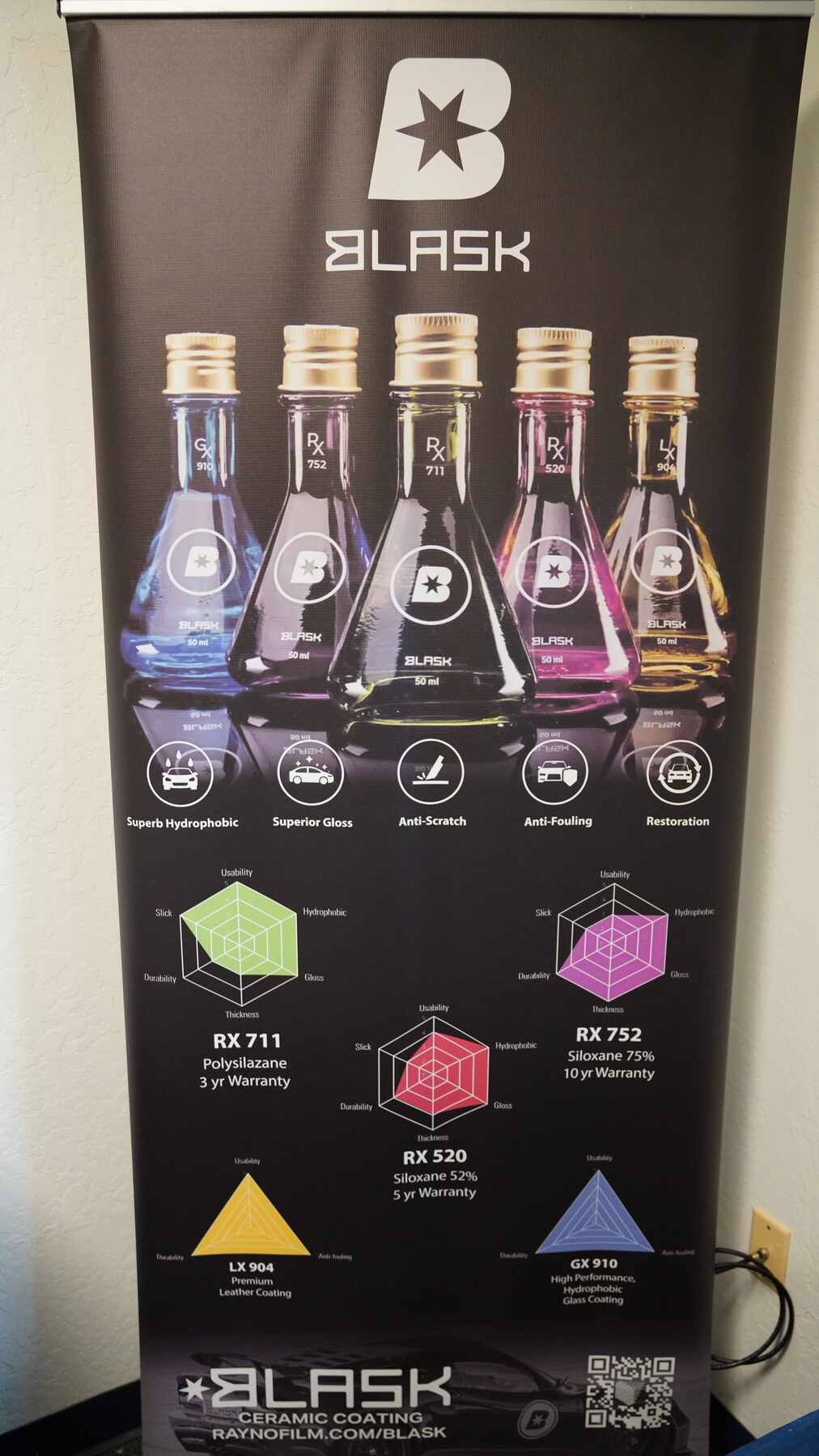
In our Sacramento shop, we install both — and we're picky about the brands we put on your car. BGI Tint is an authorized dealer for STEK paint protection film, and we apply Feynlab and BLASK ceramic coatings (plus Rayno and Carlas film options). That means manufacturer-backed products and warranties, not a no-name roll.
Here's what BGI offers:
- Full-front PPF for $1,899 — with a free ceramic coating included (starting / promo pricing). Your most chip-prone panels get STEK film topped with ceramic gloss and hydrophobics.
- 12-year STEK PPF warranty — long-term coverage on the film.
- 5-year ceramic coating warranty.
- Lifetime tint warranty if you're also tinting your windows.
- Up to 99% UV rejection and up to 98% infrared/heat rejection on our top films.

Why Sacramento drivers choose BGI:
- Built for Central Valley conditions. Hot sun and freeway miles are hard on paint — PPF handles the rock chips from I-80, and ceramic keeps the finish glossy and easy to rinse clean.
- Locally owned, 3 minutes off I-80, serving the Tri-County area: Sacramento, Placer, and El Dorado counties.
- Owner-installed expertise. Shop owner Vadym Bugai personally oversees quality on every car.
- Trust signals: 4.9★ with 380+ Google reviews, same-day appointments, free quotes, and a comfortable lounge while you wait.
Ready to protect your paint? Explore our paint protection film service and ceramic coating service pages, or jump to a free quote below.
FAQ
What is the difference between PPF and ceramic coating?
PPF (clear bra) is a thick, self-healing urethane film that physically absorbs rock chips and scratches. Ceramic coating is a thin chemical layer that bonds to your paint to add gloss, UV protection, and a hydrophobic, easy-clean surface. PPF is impact protection; ceramic is shine and maintenance.
What is better, ceramic coating or paint protection film?
Neither is universally “better” — they do different jobs. PPF is better for physical protection and longevity; ceramic coating is better for gloss, water beading, and easy cleaning at a lower price. The best protection uses both: PPF on high-impact areas, ceramic over the top.
Does ceramic coating protect against rock chips?
No. Despite “9H hardness” marketing, a ceramic coating is only a few microns thick and can't absorb impact, so a rock at highway speed will still chip the paint. Only PPF provides true rock-chip protection.
Can you put ceramic coating over PPF?
Yes, and it's a popular combination. Applying ceramic over PPF makes the film more hydrophobic, glossier, and easier to keep clean, while the film underneath still absorbs impacts. BGI Tint includes a free ceramic with our full-front PPF package.
How long does PPF last compared to ceramic coating?
Quality PPF typically lasts about 7–10 years, while ceramic coatings generally last 2–5 years (premium coatings up to ~12). PPF's longer lifespan helps offset its higher upfront cost over the years you own the car.
Is a clear bra (PPF) worth it?
For new cars, daily freeway commuters, and high-value vehicles, yes — a single deep rock-chip repair can cost more than a film's peace of mind. PPF preserves your factory paint and resale value. For budget-focused drivers who mainly want shine, ceramic may be the smarter first step.
Does PPF turn yellow?
Older and low-quality films could yellow over time, but modern premium TPU films resist UV-related yellowing and are backed by long manufacturer warranties (BGI installs STEK with a 12-year warranty). Proper installation and care keep film clear for years.
Which is more expensive, PPF or ceramic coating?
PPF is more expensive. Ceramic coatings typically run about $700–$2,300, full-front PPF runs roughly $1,200–$2,500, and full-body PPF can reach $5,500–$8,000+ — often 4–6x a top ceramic coating for full coverage.
Do I need both PPF and ceramic coating?
Not necessarily, but they complement each other well. If you want maximum protection and shine and plan to keep the car a while, PPF plus ceramic is the ideal combo. On a tighter budget, choose based on your priority: impact protection (PPF) or gloss and easy cleaning (ceramic).
Does PPF or ceramic coating make my car shinier?
Both add gloss, but ceramic coating produces the deeper, mirror-like “wet look.” PPF comes in gloss or matte finishes and adds some shine, but for maximum gloss and hydrophobics, layering ceramic on top of PPF gives the best of both.
Related Guides
Core protection guides:
- How much does PPF cost? — clear bra pricing by coverage level
- What is ceramic coating? — how ceramic paint coatings work and what they protect
- Window tint cost in Sacramento — 2026 film pricing and BGI rates
- Ceramic tint vs. regular tint — performance and price compared
- California window tint laws — legal VLT limits, fines, and exemptions
Going deeper on paint protection:
- Does PPF turn yellow? — what causes it and how modern films prevent it (planned)
- Is a clear bra worth it? — the real cost-vs-protection math (planned)
- Full front vs. full car PPF — how much coverage you actually need (planned)
- Can you ceramic coat over PPF? — layering PPF and ceramic the right way (planned)
Ready to book? See our paint protection film service page or ceramic coating service page.
Get a Free Quote
Not sure whether PPF, ceramic coating, or both is right for your car? Get a free, no-obligation quote from BGI Tint — we'll look at how you drive and recommend the right protection for your vehicle and budget. Same-day appointments are often available.
- Book online: bgitint.com/services/paint-protection-film-wrapping
- Call us: (916) 460-9257
- Free quotes • Same-day appointments • 3 minutes off I-80 • Serving Sacramento, Placer & El Dorado counties
Written by BGI Tint • Reviewed by Vadym Bugai, owner & installer
Sources:
- Metro Restyling — Ceramic Coating vs PPF
- Springs Detailing — Paint Protection Film vs Ceramic Coating (2025)
- UC PPF — PPF vs Ceramic Coating: Which Is Better (2025)
- Precision Pro Auto Detailing — Ceramic Coating Hardness: The Truth Behind 9H
- Team Nutz Technology — The 9H Myth: Does Ceramic Coating Really Stop Rock Chips?
- Champion Window Tinting — Paint Protection Film Cost vs Ceramic Coating 2025
- Titan Coatings — Ceramic Coating vs PPF Cost: A Complete Financial Guide
- CyPaint — Paint Protection Film vs. Ceramic Coating: Is the Investment Worth It?
- Gtechniq — Ceramic Coating vs PPF: What You Need to Know
Can You Order Auto Detailing for Roseville Vehicles from BGI Pro Auto Detailing?
Yes, Roseville vehicle owners can consider BGI Pro Auto Detailing because the shop serves the broader Sacramento-area market and lists Roseville among its service cities. The shop location in North Highlands can be convenient for drivers coming from nearby communities, especially when the route works with Interstate 80 access. For many customers, that matters: a good detailing or protection service is worth planning, but the trip still needs to be practical.
The simplest next step is to request a quote and explain the vehicle, the service needed, and whether the car is coming from Roseville or another nearby area. That allows the shop to guide the customer toward the right service, whether it is detailing, tinting, ceramic protection, paint protection film, or dent restoration. Before visiting, customers can also confirm timing, service length, and any prep instructions so the appointment goes smoothly.
What Should You Know before Choosing an Auto Detailing Company?
Before choosing an auto detailing company, look beyond the word “detail” and ask what the service actually includes. Some services focus on basic cleaning, while others may involve deeper interior work, exterior decontamination, protection products, tinting, PPF, ceramic coating, or dent restoration. The right choice depends on what you want fixed, improved, protected, or maintained.
From the customer side, there are a few useful angles to compare. First, review the service scope: does the shop explain what is included and what may cost extra? Second, look at reviews and visible business information so you know who you are trusting with the vehicle. Third, ask about materials and process, especially for tint, ceramic coating, and paint protection film. And finally, be realistic about results. Detailing can dramatically improve a vehicle’s appearance, but deep damage, severe stains, worn materials, or paint defects may require extra work or may not disappear completely.
Who Needs to Order Auto Detailing Services?
Auto detailing is useful for more than show cars. Daily drivers need it because regular commuting leaves behind dust, road film, spills, odors, fingerprints, and grime that basic washing does not fully solve. Families often need detailing because interiors take real abuse from snacks, car seats, sports gear, pets, and constant use.
Luxury car owners and enthusiasts may choose detailing to preserve the vehicle’s finish and keep the cabin looking closer to new. Used car owners often book detailing after buying a vehicle because they want a cleaner, more personal-feeling interior. And anyone preparing to sell or trade in a vehicle should consider detailing before photos, test drives, or appraisal. A clean, well-presented vehicle simply makes a better first impression.
What Guarantees, Documents, and Proof of Expertise Do You Provide?
When choosing an automotive detailing shop, proof often comes from visible information, real customer feedback, and clear communication—not just promises. BGI Pro Auto Detailing displays a 4.9 Google Reviews rating with 360 reviews, which helps customers evaluate the shop through public feedback. The business also provides visible shop details, including location, phone contact, operating hours, and a defined list of services.
For guarantees, customers should ask what applies to the exact service being purchased. Ceramic protection, tinting, PPF, detailing, and dent restoration may all have different expectations, care instructions, and limitations. A clear quote and service explanation are useful because they document what the customer requested and what the shop agreed to perform.
How Does Work Progress and What Timelines Can You Expect from Our Auto Detailing Store?
The work usually starts with booking or requesting a quote, then bringing the vehicle to the shop for inspection. Once the vehicle arrives, the team can review the condition, confirm the selected service, and explain what will happen during the appointment. A lighter detailing service may move faster, while ceramic coating, paint protection film, window tinting, or more involved restoration work can require more time because prep and curing or installation steps matter.
During the service, progress depends on the vehicle’s condition and the type of work being performed. For example, a heavily used family SUV may need more interior attention than a lightly driven sedan, and protective film work has a different timeline than an exterior cleaning. Customers should expect the shop to complete a final quality check before handoff. At that point, the vehicle is reviewed, any key care instructions can be explained, and the customer can see the result before leaving.
Why Do Clients Choose Our Automotive Detailing Shop?
Clients often choose BGI Pro Auto Detailing because the shop combines multiple automotive appearance and protection services in one Sacramento-area location. The company presents itself as an automotive shop serving drivers who want detailing, tint, ceramic paint protection, paint protection film, dent restoration, and related protection services without guessing where to start. That is especially helpful when a customer wants more than a quick wash but is not sure whether their vehicle needs detailing, coating, PPF, or another service.
The shop also displays a 4.9 Google Reviews rating with 360 reviews, which gives new customers a useful public signal before booking. Another practical advantage is access: the location is listed at 3437 Myrtle Ave #355, North Highlands, CA 95660, with easy access from Interstate 80 and listed hours from Monday to Saturday, 8am to 8pm. Add a free quote and a customer-focused workflow, and the experience becomes easier to plan. Customers can call, ask what fits their vehicle, and get a clearer idea of the next step before committing.
How Much Do Services Cost and What Affects the Price of Auto Detailing?
Auto detailing prices can vary because no two vehicles arrive in the same condition. A compact commuter car that only needs a maintenance detail will usually require less time and product than a large SUV with heavy interior buildup, pet hair, stains, oxidation, or neglected paint. The same logic applies to protective services: tinting, ceramic coating, PPF, and dent restoration all depend on the amount of work involved.
The best way to get a realistic number is to request a quote based on the exact vehicle and service goal. BGI Pro Auto Detailing can review what the vehicle needs and help the customer understand which package or add-on makes sense.
How Does the Auto Detailing Process Work at BGI Pro Auto Detailing?
A good detailing visit starts before any product touches the vehicle. At BGI Pro Auto Detailing, the process should begin with a basic inspection so the team can understand the vehicle’s size, condition, surface issues, and the client’s goal for the service. One driver may want a deep clean before selling a car; another may need tint, ceramic protection, or paint protection film for a newer vehicle.
After the inspection, the right service or package can be selected. The work may include interior cleaning, exterior washing, surface preparation, tint installation, ceramic coating prep, PPF application, dent restoration, or a combination of services. The final stage is the quality review, where the completed work is checked before customer handoff. That final review matters because detailing is visual work: the customer should understand what was done, what results were achieved, and how to care for the vehicle afterward.
What Services Does BGI Pro Auto Detailing Provide in Sacramento, CA?
BGI Pro Auto Detailing provides vehicle appearance and protection services for drivers in the Sacramento area, with a shop location in North Highlands, CA. The core service menu includes automotive detailing, automotive window tinting, paint protection film wrapping, ceramic paint protection, paintless dent restoration, commercial window tinting, and aircraft concierge detailing. That means clients can visit the shop for anything from a cleaner, fresher daily driver to a more serious exterior protection plan for a luxury, new, or recently restored vehicle.
From a practical angle, detailing focuses on cleaning, restoring, and refreshing the vehicle’s interior and exterior surfaces. Tinting helps improve privacy, comfort, and sun control, while ceramic coating and PPF are chosen when the goal is longer-term paint protection. Paintless dent restoration is useful when a vehicle has minor dents that may not require traditional bodywork. And for business vehicles or specialized assets, commercial tinting and aircraft detailing give clients options beyond standard car care.

Useful articles for drivers who want better comfort, cleaner paint, stronger protection, and smarter car care decisions.

Useful articles for drivers who want better comfort, cleaner paint, stronger protection, and smarter car care decisions.

Useful articles for drivers who want better comfort, cleaner paint, stronger protection, and smarter car care decisions.