What Is Ceramic Coating —
Is It Worth It?
How ceramic coating works, what it actually protects, how long it lasts, what it costs, and whether it's worth it for your car.
Quick answer: What is ceramic coating? It's a liquid polymer made with silicon dioxide (SiO2) nanoparticles that chemically bonds to your car's clear coat, leaving a thin, durable, water-repelling layer. It protects against UV rays, chemicals, and light swirls, and lasts years — not weeks like wax. Whether it's worth it depends on your goals.
Below we break down what ceramic coating actually does (and what it can't do), how long it lasts, real-world cost ranges, the most common myths, and how BGI Tint installs it here in Sacramento.
What Is Ceramic Coating?
Ceramic coating is a liquid paint protection product made primarily from silicon dioxide (SiO2) — the same compound found in quartz and sand — suspended in a polymer carrier and engineered at the nanoscale. When applied to your vehicle's clear coat, it cures into a thin, transparent, glass-like layer that bonds directly to the paint (Ceramic Pro, IGL Coatings).
The “nano” in nano-ceramic coating refers to the size of those SiO2 particles. They're small enough to fill the microscopic pores and imperfections in your clear coat, creating a smoother, more uniform, and far more chemically resistant surface than bare paint.
The key thing to understand is the difference between a coating and a topping. Wax and most spray sealants simply sit on top of your paint and wash or wear away. A true ceramic coating forms a chemical bond with the clear coat — which is why detailers often call it “semi-permanent.” It won't rinse off in a car wash, and removing it usually requires polishing or abrasion.
Quick clarification: ceramic coating is not the same as ceramic window tint. Ceramic coating protects your paint; ceramic tint is a film for your glass that blocks heat and UV. We compare them in our ceramic coating vs ceramic tint guide.
How Does Ceramic Coating Work?
Ceramic coating works through a chemical bonding process. The product is applied by hand to clean, decontaminated, and often paint-corrected panels. As the carrier solvent evaporates, the SiO2 nanoparticles cross-link with each other and with the clear coat, forming a hardened, three-dimensional matrix that's chemically inert (KL Tint Studio, Auto Cosmetics).
Two properties make this layer so effective:
- Low surface energy (hydrophobicity). The cured coating has very low surface energy, so water and liquids can't spread out and grip the paint. Instead they bead up and roll off, dragging dirt and contaminants with them — that's the self-cleaning, “water sheeting” effect ceramic coatings are famous for.
- A dense, sealed surface. Because the nanoparticles fill the clear coat's microscopic pores, there's far less for contaminants, UV rays, and chemicals to grab onto.
Prep is where the real work happens. A coating only performs as well as the surface underneath it. Professional installers wash, clay, and polish the paint first, because the coating locks in whatever condition the paint is in — swirls and all. This is the single biggest reason professional results outlast DIY ones (Precision Pro Auto Detailing).
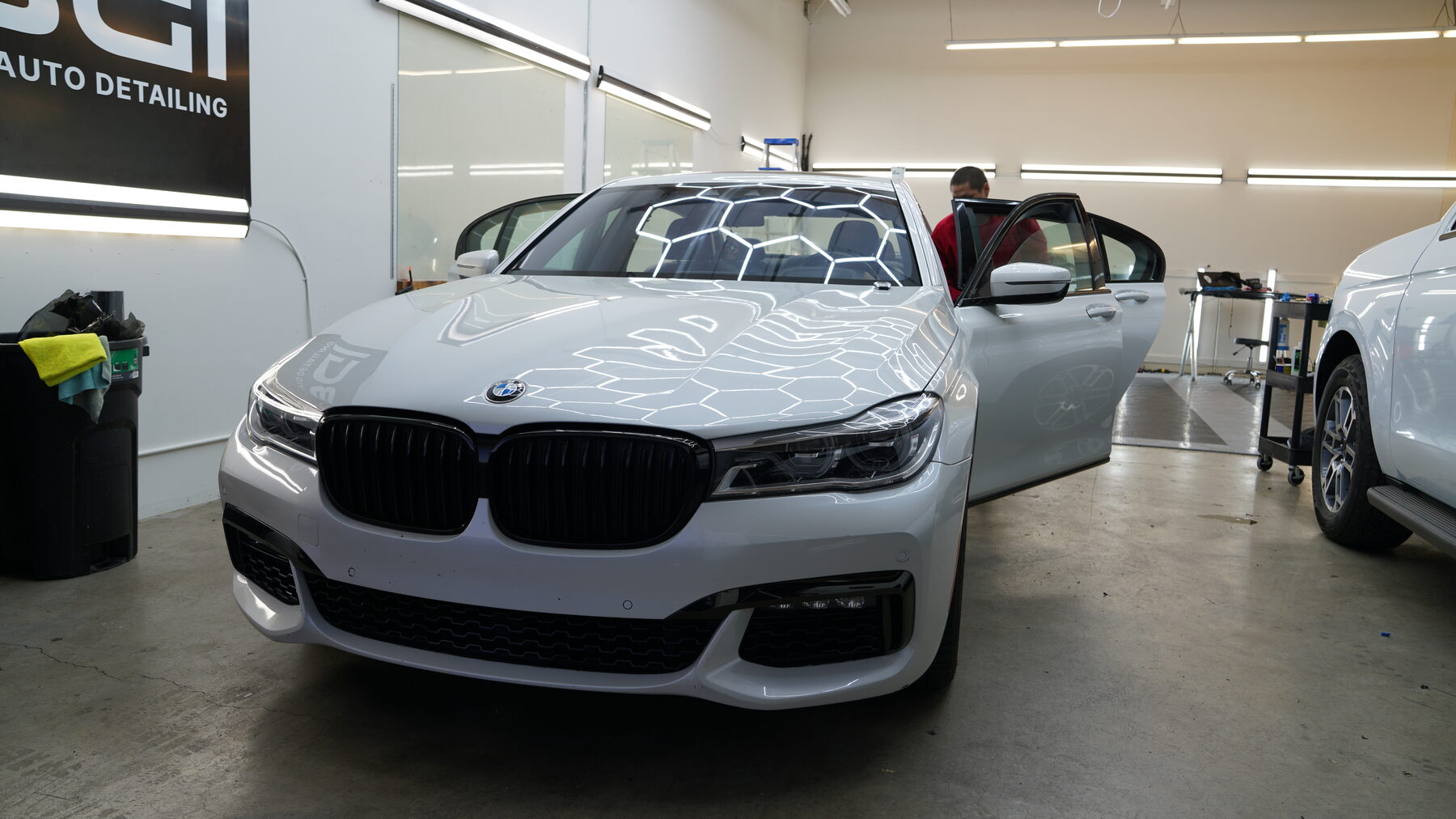
What Does Ceramic Coating Do?
Here's what a quality ceramic coating genuinely does for your car:
- Blocks UV and oxidation. Ceramic coatings contain UV stabilizers that absorb and dissipate ultraviolet radiation, slowing the fading, chalking, and oxidation that sun-baked paint suffers — a real benefit in sunny Sacramento.
- Repels water and grime. The hydrophobic surface makes washing faster and keeps the car cleaner between washes.
- Resists chemicals and acids. It shields against acidic threats like bird droppings, bug splatter, tree sap, road salt, and industrial fallout that can etch unprotected clear coat (Ceramic Pro).
- Deepens gloss. It adds clarity and a wet, mirror-like shine that makes the paint look richer.
- Adds light scratch resistance. It resists fine swirl marks and micro-scratches better than bare paint, wax, or sealant.
Now the honest limits. A ceramic coating is scratch-resistant, not scratch-proof, and it does not stop rock chips, key scratches, door dings, or deep abrasions. A cured coating is only about 1–10 microns thick — roughly the thickness of a human hair — so it physically can't absorb impact (AvalonKing, IGL Coatings). For rock-chip and impact protection you need paint protection film (PPF), which is a thick, flexible layer — more on that below.
Is Ceramic Coating Worth It?
For most drivers who plan to keep their car for several years and want it to look great with less effort, yes — ceramic coating is worth it. But it's not magic, and it isn't right for everyone. Here's the balanced view:
| Pros | Cons |
|---|---|
| Lasts years, not weeks like wax | Higher upfront cost than wax/sealant |
| Strong hydrophobic, easier washing | Won't stop rock chips or deep scratches |
| UV and oxidation protection | Doesn't replace PPF for impact protection |
| Resists bird droppings, sap, acids | Needs proper prep to perform (and last) |
| Deep, long-lasting gloss | DIY results are inconsistent vs. pro install |
| Resists light swirls and micro-scratches | Still requires regular (gentle) washing |
Who it's a great fit for:
- Daily drivers who want a cleaner car with less washing effort
- New-car owners who want to protect factory paint from day one
- Sun-exposed vehicles in hot climates (hello, Sacramento summers)
- Anyone planning to sell or trade in later — protected paint shows better
Who might skip it (or pair it with PPF): if your top concern is rock chips on the front end from highway driving, ceramic alone won't solve that — you'll want PPF on high-impact areas, ideally with ceramic on top.
How Long Does Ceramic Coating Last?
Lifespan depends heavily on product grade, application quality, and maintenance. Here's how the tiers generally compare across the industry:
| Type | Typical lifespan | Notes |
|---|---|---|
| DIY / consumer spray coatings | ~6 months – 2 years | Easy to apply, thinner, less durable |
| Professional mid-tier coating | 2 – 5 years | Pro prep + thicker, higher-SiO2 product |
| Premium professional coating | 5 – 8+ years | Multi-layer, best prep, longest warranties |
Sources: Lords of Detailing, Vive Auto Detailing, Precision Pro.
The gap between DIY and professional comes down to two things: product concentration (pro coatings carry more SiO2) and prep (decontamination and paint correction before application). A premium coating applied over poorly prepped paint won't reach its rated lifespan — and good maintenance (gentle, regular washing) is what gets you to the top of the range.
Ceramic Coating vs Wax vs Sealant
All three add shine and some protection, but they're very different technologies. Here's how they stack up:
| Carnauba wax | Synthetic sealant | Ceramic coating | |
|---|---|---|---|
| Lifespan | Weeks – ~3 months | ~6 months | 2 – 5+ years (pro) |
| Bonds to paint | Sits on top | Loosely bonds | Chemical/molecular bond |
| Hydrophobic | Mild | Moderate | Strong |
| Scratch resistance | None | Minimal | Resists light swirls (9H pencil) |
| Application | Easy DIY | Easy DIY | Pro prep recommended |
| Relative cost | $ | $ | $$$ |
The short version: wax is a quick, warm-glow topping you reapply constantly; sealant lasts a bit longer; ceramic coating is the durable, bonded option that protects for years. If you've been waxing every couple of months, a coating trades that recurring chore for a one-time professional install.
Ceramic Coating vs PPF
This is the most important comparison to get right, because the two solve different problems:
- Ceramic coating = a thin chemical layer for gloss, hydrophobicity, UV, and chemical resistance. It does not stop physical impacts.
- Paint protection film (PPF), also called “clear bra,” = a thick (typically 6–10 mil) self-healing thermoplastic urethane film that physically absorbs rock chips, scratches, and road rash (Gtechniq, Blue Ocean Auto Spa).
Many drivers get the best of both: PPF on high-impact areas (front bumper, hood, fenders, mirrors) for chip protection, with ceramic coating over the whole car (including over the film) for gloss and easy cleaning. For a full breakdown, see our PPF vs ceramic coating guide.
How Much Does Ceramic Coating Cost?
Professional ceramic coating pricing in the U.S. generally falls between $500 and $3,000, driven mostly by vehicle size, the number of coating layers, the product/warranty tier, and whether your paint needs correction first. Here are verified market ranges:
| Vehicle / scope | Typical U.S. price (2025–26) |
|---|---|
| Compact / small car | $600 – $1,500 |
| Midsize sedan / crossover | $800 – $2,000 |
| SUV / truck | $1,000 – $3,000 |
| Paint correction (add-on, if needed) | +$500 – $2,000 |
Sources: AutoZone, Spec Auto Detailing, Springs Detailing.
The biggest swing factor most people don't budget for is paint correction. If your paint has swirls, scratches, or oxidation, those need to be polished out before coating — otherwise the coating locks them in. Correction can add $500–$2,000 depending on condition.
BGI's offer: At BGI Tint, ceramic coating packages start at $699, backed by a 5-year ceramic warranty. Pricing depends on your vehicle and the package you choose — get a free quote for an exact number.
Ceramic Coating Myths
Does ceramic coating prevent scratches?
Not the way most people hope. Ceramic coating adds resistance to light swirl marks and micro-scratches, but it will not prevent rock chips, key scratches, or deep gouges. You'll see “9H” advertised — that's a pencil hardness rating (the Wolff-Wilborn / ASTM D3363 lab test), not a guarantee of real-world toughness (AvalonKing). For genuine scratch and chip protection, PPF is the answer.
Can you wax over ceramic coating?
You can, but you generally shouldn't. The oils in traditional wax can clog the coating's hydrophobic layer, cloud the finish, and interfere with its self-cleaning effect. If you want to refresh the look or top up protection, use a dedicated SiO2-based ceramic maintenance spray instead — it's designed to bond with and reinforce the coating (Ceramic Pro, AvalonKing).
How do you maintain a ceramic-coated car?
Maintenance is simple — that's part of the appeal. Wash regularly (every couple of weeks) with a pH-neutral ceramic-safe shampoo and a clean microfiber mitt, avoid harsh automatic car washes with stiff brushes, dry with a soft microfiber towel, and use a ceramic boost spray a few times a year to reinforce hydrophobics. Skip abrasive products and household detergents.
Is ceramic coating safe for your paint?
Yes — when properly applied, ceramic coating is safe and protective. It's chemically inert once cured and actually shields the clear coat rather than harming it. The risks come from improper DIY application (high spots, streaking, or coating over contaminated paint) or aggressive later removal, which is why professional installation is recommended.
Ceramic Coating at BGI Tint in Sacramento
In our Sacramento shop, ceramic coating starts with the part that matters most: prep. We decontaminate and, where needed, paint-correct your vehicle before a single drop of coating goes on — because the coating is only as good as the surface beneath it.
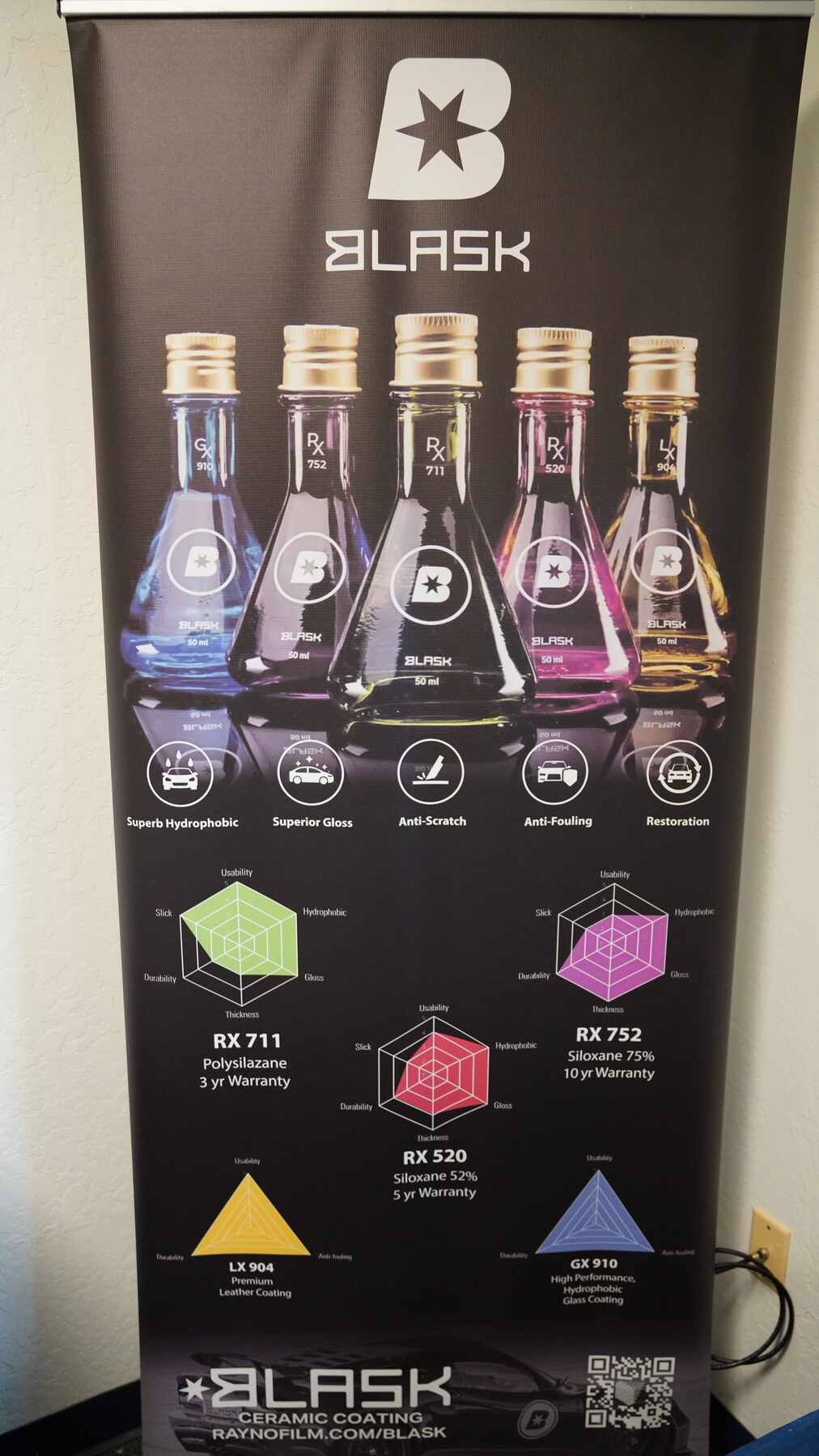
BGI Tint is an authorized installer working with premium ceramic systems including Feynlab and BLASK, so we can match the coating tier to your vehicle and how long you plan to keep it.
What you get with BGI:
- Ceramic packages from $699
- 5-year ceramic warranty
- Up to 99% UV rejection and protection built for hot Sacramento summers
- Professional, dust-controlled installation by owner-installer Vadym Bugai and team
Why local drivers choose us:
- 4.9★ with 380+ Google reviews and locally owned
- Same-day appointments and free quotes
- Comfortable lounge while you wait
- Easy to reach — 3 minutes off I-80, serving Sacramento and the Tri-County area (Sacramento, Placer, El Dorado counties)
Want ceramic and rock-chip protection? Ask about pairing PPF with ceramic — including our full-front PPF for $1,899 with free ceramic.
FAQ
What is ceramic coating in simple terms?
It's a liquid made with silicon dioxide (SiO2) that hardens into a thin, glass-like layer chemically bonded to your car's paint. It makes the surface water-repellent, glossier, and more resistant to UV and chemicals, and it lasts for years instead of weeks like wax.
Is ceramic coating worth it?
For most drivers who keep their cars a few years, yes — it protects paint, makes washing easier, and holds a deep shine far longer than wax. If your main worry is rock chips, pair it with PPF or choose PPF for high-impact areas, because ceramic alone won't stop chips.
How long does ceramic coating last?
DIY products typically last about 6 months to 2 years. Professional coatings last 2–5 years for mid-tier products and 5–8+ years for premium systems — assuming proper prep and gentle, regular maintenance.
Does ceramic coating prevent scratches?
It resists light swirls and micro-scratches but is not scratch-proof and won't stop rock chips, key scratches, or deep gouges. The “9H” rating is a lab pencil-hardness test, not a measure of real-world impact resistance.
How much does ceramic coating cost?
Professional coatings generally run $500–$3,000 in the U.S., depending on vehicle size, number of layers, product tier, and whether paint correction is needed. At BGI Tint, packages start at $699.
Can you wax over ceramic coating?
You can, but it's not recommended — wax oils can clog the hydrophobic layer and dull the finish. Use a dedicated SiO2 ceramic maintenance spray instead to refresh protection and shine.
How do you maintain a ceramic-coated car?
Wash every couple of weeks with a pH-neutral, ceramic-safe shampoo and a clean microfiber mitt, avoid harsh brush car washes, dry with soft microfiber, and apply a ceramic boost spray a few times a year.
Is ceramic coating safe for my car's paint?
Yes. Once cured it's chemically inert and protects the clear coat rather than harming it. The main risks come from improper DIY application, which is why professional installation is recommended.
What's the difference between ceramic coating and PPF?
Ceramic coating is a thin chemical layer for gloss, water repellency, UV, and chemical resistance. PPF (paint protection film / “clear bra”) is a thick, flexible film that physically absorbs rock chips and scratches. Many drivers use both together.
Is ceramic coating the same as ceramic window tint?
No. Ceramic coating protects your paint; ceramic window tint is a film for your glass that blocks heat and UV. They're completely different products that are often confused because of the shared word “ceramic.”
Related Guides
- PPF vs Ceramic Coating: Which Should You Choose? — the head-to-head on impact protection vs. gloss and chemical resistance.
- How Much Does PPF Cost? — paint protection film pricing by coverage area.
- Window Tint Cost in Sacramento — local pricing by film type and California law.
- Ceramic Tint vs Regular Tint — note: this is about window tint, not ceramic coating — two different products.
- California Window Tint Laws — legal VLT limits before you tint.
- Ceramic Coating vs Wax (planned) — why a coating replaces the wax-every-month routine.
- How to Maintain a Ceramic-Coated Car (planned) — wash routine, products to avoid, boost sprays.
- How Long Does Ceramic Coating Last? (planned) — durability by tier and what shortens it.
- Best Ceramic Coating for Cars (planned) — how to compare products and warranties.
- Ceramic Coating Service — BGI Tint's ceramic coating page.
Get a Free Quote
Ready to protect your paint? Get a free quote for ceramic coating at BGI Tint in Sacramento. We offer same-day appointments and free quotes, and we'll recommend the right package — and whether PPF makes sense for your driving.
- Book online: BGI Tint Ceramic Coating
- Call us: (916) 460-9257
- Visit: Sacramento, CA — just 3 minutes off I-80, serving the Tri-County area
Written by BGI Tint • Reviewed by Vadym Bugai, owner & installer
Sources:
- Ceramic Pro — What Does a Nano Ceramic Coating Do?
- Ceramic Pro — Can You Apply Wax on Ceramic Coatings?
- IGL Coatings — Automobile Ceramic Coating Guide
- IGL Coatings — Ceramic Coating Hardness (9H)
- KL Tint Studio — The Science Behind Nano-Ceramic Coating
- Auto Cosmetics — How Ceramic Coating Works
- AvalonKing — What Is 9H Hardness With Ceramic Coating
- AvalonKing — Can You Wax Over Ceramic Coatings
- Lords of Detailing — How Long Does Ceramic Coating Last
- Vive Auto Detailing — How Long Do Ceramic Coatings Last
- Precision Pro Auto Detailing — DIY vs Professional Ceramic Coating
- AutoZone — How Much Does It Cost to Ceramic Coat a Car
- Spec Auto Detailing — How Much Does Ceramic Coating Cost
- Springs Detailing — How Much Does Ceramic Coating Actually Cost
- Gtechniq — Ceramic Coating vs PPF
- Blue Ocean Auto Spa — Does Ceramic Coating Prevent Rock Chips Like PPF
Can You Order Auto Detailing for Roseville Vehicles from BGI Pro Auto Detailing?
Yes, Roseville vehicle owners can consider BGI Pro Auto Detailing because the shop serves the broader Sacramento-area market and lists Roseville among its service cities. The shop location in North Highlands can be convenient for drivers coming from nearby communities, especially when the route works with Interstate 80 access. For many customers, that matters: a good detailing or protection service is worth planning, but the trip still needs to be practical.
The simplest next step is to request a quote and explain the vehicle, the service needed, and whether the car is coming from Roseville or another nearby area. That allows the shop to guide the customer toward the right service, whether it is detailing, tinting, ceramic protection, paint protection film, or dent restoration. Before visiting, customers can also confirm timing, service length, and any prep instructions so the appointment goes smoothly.
What Should You Know before Choosing an Auto Detailing Company?
Before choosing an auto detailing company, look beyond the word “detail” and ask what the service actually includes. Some services focus on basic cleaning, while others may involve deeper interior work, exterior decontamination, protection products, tinting, PPF, ceramic coating, or dent restoration. The right choice depends on what you want fixed, improved, protected, or maintained.
From the customer side, there are a few useful angles to compare. First, review the service scope: does the shop explain what is included and what may cost extra? Second, look at reviews and visible business information so you know who you are trusting with the vehicle. Third, ask about materials and process, especially for tint, ceramic coating, and paint protection film. And finally, be realistic about results. Detailing can dramatically improve a vehicle’s appearance, but deep damage, severe stains, worn materials, or paint defects may require extra work or may not disappear completely.
Who Needs to Order Auto Detailing Services?
Auto detailing is useful for more than show cars. Daily drivers need it because regular commuting leaves behind dust, road film, spills, odors, fingerprints, and grime that basic washing does not fully solve. Families often need detailing because interiors take real abuse from snacks, car seats, sports gear, pets, and constant use.
Luxury car owners and enthusiasts may choose detailing to preserve the vehicle’s finish and keep the cabin looking closer to new. Used car owners often book detailing after buying a vehicle because they want a cleaner, more personal-feeling interior. And anyone preparing to sell or trade in a vehicle should consider detailing before photos, test drives, or appraisal. A clean, well-presented vehicle simply makes a better first impression.
What Guarantees, Documents, and Proof of Expertise Do You Provide?
When choosing an automotive detailing shop, proof often comes from visible information, real customer feedback, and clear communication—not just promises. BGI Pro Auto Detailing displays a 4.9 Google Reviews rating with 360 reviews, which helps customers evaluate the shop through public feedback. The business also provides visible shop details, including location, phone contact, operating hours, and a defined list of services.
For guarantees, customers should ask what applies to the exact service being purchased. Ceramic protection, tinting, PPF, detailing, and dent restoration may all have different expectations, care instructions, and limitations. A clear quote and service explanation are useful because they document what the customer requested and what the shop agreed to perform.
How Does Work Progress and What Timelines Can You Expect from Our Auto Detailing Store?
The work usually starts with booking or requesting a quote, then bringing the vehicle to the shop for inspection. Once the vehicle arrives, the team can review the condition, confirm the selected service, and explain what will happen during the appointment. A lighter detailing service may move faster, while ceramic coating, paint protection film, window tinting, or more involved restoration work can require more time because prep and curing or installation steps matter.
During the service, progress depends on the vehicle’s condition and the type of work being performed. For example, a heavily used family SUV may need more interior attention than a lightly driven sedan, and protective film work has a different timeline than an exterior cleaning. Customers should expect the shop to complete a final quality check before handoff. At that point, the vehicle is reviewed, any key care instructions can be explained, and the customer can see the result before leaving.
Why Do Clients Choose Our Automotive Detailing Shop?
Clients often choose BGI Pro Auto Detailing because the shop combines multiple automotive appearance and protection services in one Sacramento-area location. The company presents itself as an automotive shop serving drivers who want detailing, tint, ceramic paint protection, paint protection film, dent restoration, and related protection services without guessing where to start. That is especially helpful when a customer wants more than a quick wash but is not sure whether their vehicle needs detailing, coating, PPF, or another service.
The shop also displays a 4.9 Google Reviews rating with 360 reviews, which gives new customers a useful public signal before booking. Another practical advantage is access: the location is listed at 3437 Myrtle Ave #355, North Highlands, CA 95660, with easy access from Interstate 80 and listed hours from Monday to Saturday, 8am to 8pm. Add a free quote and a customer-focused workflow, and the experience becomes easier to plan. Customers can call, ask what fits their vehicle, and get a clearer idea of the next step before committing.
How Much Do Services Cost and What Affects the Price of Auto Detailing?
Auto detailing prices can vary because no two vehicles arrive in the same condition. A compact commuter car that only needs a maintenance detail will usually require less time and product than a large SUV with heavy interior buildup, pet hair, stains, oxidation, or neglected paint. The same logic applies to protective services: tinting, ceramic coating, PPF, and dent restoration all depend on the amount of work involved.
The best way to get a realistic number is to request a quote based on the exact vehicle and service goal. BGI Pro Auto Detailing can review what the vehicle needs and help the customer understand which package or add-on makes sense.
How Does the Auto Detailing Process Work at BGI Pro Auto Detailing?
A good detailing visit starts before any product touches the vehicle. At BGI Pro Auto Detailing, the process should begin with a basic inspection so the team can understand the vehicle’s size, condition, surface issues, and the client’s goal for the service. One driver may want a deep clean before selling a car; another may need tint, ceramic protection, or paint protection film for a newer vehicle.
After the inspection, the right service or package can be selected. The work may include interior cleaning, exterior washing, surface preparation, tint installation, ceramic coating prep, PPF application, dent restoration, or a combination of services. The final stage is the quality review, where the completed work is checked before customer handoff. That final review matters because detailing is visual work: the customer should understand what was done, what results were achieved, and how to care for the vehicle afterward.
What Services Does BGI Pro Auto Detailing Provide in Sacramento, CA?
BGI Pro Auto Detailing provides vehicle appearance and protection services for drivers in the Sacramento area, with a shop location in North Highlands, CA. The core service menu includes automotive detailing, automotive window tinting, paint protection film wrapping, ceramic paint protection, paintless dent restoration, commercial window tinting, and aircraft concierge detailing. That means clients can visit the shop for anything from a cleaner, fresher daily driver to a more serious exterior protection plan for a luxury, new, or recently restored vehicle.
From a practical angle, detailing focuses on cleaning, restoring, and refreshing the vehicle’s interior and exterior surfaces. Tinting helps improve privacy, comfort, and sun control, while ceramic coating and PPF are chosen when the goal is longer-term paint protection. Paintless dent restoration is useful when a vehicle has minor dents that may not require traditional bodywork. And for business vehicles or specialized assets, commercial tinting and aircraft detailing give clients options beyond standard car care.

Useful articles for drivers who want better comfort, cleaner paint, stronger protection, and smarter car care decisions.

Useful articles for drivers who want better comfort, cleaner paint, stronger protection, and smarter car care decisions.

Useful articles for drivers who want better comfort, cleaner paint, stronger protection, and smarter car care decisions.