

.svg)
What Does
Car Detailing Include?
A structured interior and exterior cleaning process — with reconditioning and protection only where the written scope says so.

Quick answer: Car detailing is a structured interior and/or exterior cleaning process, with reconditioning and protection included only when the written scope says so. Paint correction, ceramic coating, PPF, repairs, and specialist remediation are separate services. The package name is never a substitute for a written checklist.
What is car detailing, and what does it mean?
Car detailing is a systematic process of cleaning, reconditioning, and protecting a vehicle's interior and exterior surfaces. It goes beyond routine washing by addressing small areas, material differences, bonded contamination, appearance defects, and protection needs. It does not automatically include mechanical repair, body work, repainting, or every restoration service a shop may offer.
The International Detailing Association describes detailing as a meticulous, step-by-step cleaning and reconditioning process for both the interior and exterior. That definition is useful because it focuses on method rather than a package name. "Detail" is not a regulated list of steps, so one provider's standard package can differ substantially from another's. The customer should verify the written scope.
From a cleaning angle, detailing removes loose soil, residue, and contamination from accessible areas. From a reconditioning angle, it can improve the appearance of dull trim, stained upholstery, or lightly marred paint when the material permits. From a protection angle, it may add wax, sealant, dressing, or another product that helps a cleaned surface resist exposure within the product's limitations. Each angle requires different tools and expectations.
Detailing is not the same as repair. Cleaning a leather seat will not replace missing dye or close a tear. Polishing can reduce certain defects in the upper paint surface, but it cannot restore paint that has chipped through to primer. Extraction can remove residue from fabric, but it cannot promise that every old stain or odor source embedded in padding will disappear. Recognizing those boundaries protects both the vehicle and the customer.
BGI Pro Auto Detailing presents its workflow as check-in, exterior washing, interior cleaning, detailing treatment, final touches, and final inspection. That sequence captures the practical meaning of professional detailing: inspect first, choose the service, work through controlled stages, and review the result. The exact inclusions still depend on the selected package and the vehicle's condition.
What does exterior car detailing include?
Exterior car detailing usually includes a controlled pre-rinse and wash, wheels and tires, safe drying, paint decontamination where specified, exterior glass and trim, and a protective finishing step. Paint enhancement, correction, ceramic coating, and PPF may be offered by the same shop but should be marked clearly when they are optional.
| Exterior stage | Standard purpose | Common methods | Optional or separate work |
|---|---|---|---|
| Inspection and pre-rinse | Identify damage and remove loose abrasive soil | Lighting, rinse, pre-wash chemistry | Detailed paint mapping or thickness readings |
| Wheels and tires | Remove road film and brake-dust residue with compatible products | Separate tools, agitation, rinse, tire cleaning | Wheel-off work, coating, corrosion repair |
| Contact wash | Remove remaining exterior soil while limiting new marring | Automotive shampoo, clean mitts, section-by-section wash | Specialty treatment for matte paint or film |
| Drying | Prevent water spotting and prepare for inspection | Microfiber towels, controlled air where safe | Mineral-spot correction |
| Decontamination | Remove bonded iron, tar, sap, or roughness when included | Chemical removers and/or clay-type media | Overspray removal or severe contamination treatment |
| Paint enhancement | Improve gloss and light marring | Cleaner, glaze, or machine polish as defined | True multi-stage paint correction |
| Glass and trim | Clean exterior glass and restore a consistent finish | Material-safe cleaners and dressings | Trim restoration, film replacement, glass polishing |
| Protection | Add sacrificial protection to clean surfaces | Wax or sealant | Ceramic coating or paint protection film |
Order matters. Wheels are often treated separately so brake dust does not contaminate paint tools. Loose dirt is removed before contact washing because rubbing particles across clear coat can create marring. Decontamination follows washing, and machine polishing — if selected — occurs only after the surface is clean enough for controlled abrasive work. Protection is applied after correction or enhancement, not before.
The scope must state what "exterior detail" means. J.D. Power's detailing guide lists common tools and stages such as wheel cleaning, rinsing, washing, drying, clay treatment, polishing, and wax or sealant. That is an educational sequence, not proof that every commercial package includes all of it.
Ask BGI whether decontamination, machine polishing, tire dressing, jambs, trim treatment, or protection are included. If the vehicle has PPF, ceramic coating, matte paint, graphics, or aftermarket components, disclose them before work. Exterior detailing should be adapted to the finish rather than applied as a universal recipe.
What is included in interior car detailing?
Interior car detailing generally includes vacuuming, crevice work, cleaning of mats, dashboard, console, doors, trim, interior glass, and material-appropriate care for seats and upholstery. Extraction, intensive stain work, odor remediation, leather conditioning, and specialist contamination cleanup may be separate.
| Interior component | Standard-detail focus | Material or risk question | Possible add-on |
|---|---|---|---|
| Carpet and floor | Loose debris, sand, edges, accessible under-seat areas | How much moisture can be used and dried? | Deep extraction, pet-hair removal |
| Floor mats | Vacuuming and cleaning for textile or rubber | Are logos, clips, or coatings delicate? | Restoration or replacement |
| Seats | Vacuuming and surface-appropriate cleaning | Cloth, coated leather, vinyl, perforation, Alcantara-like material? | Extraction, conditioning, dye or repair work |
| Dashboard and console | Dust, fingerprints, residue, controls | Are soft-touch coatings, screens, or gloss trim present? | Scratch repair or component replacement |
| Door panels and pockets | Soil in touch points, seams, storage areas | Can the coating tolerate the proposed cleaner? | Repair of peeling or worn trim |
| Glass and mirrors | Interior film and fingerprints | Is aftermarket tint present? | Specialty film or mineral treatment |
| Vents and crevices | Accessible dust and debris | Can air or steam be used without driving moisture into electronics? | HVAC or odor-source service |
| Cargo area | Vacuuming and surface cleaning when included | Pet use, spills, hidden storage, third row? | Deep restoration or contamination service |
Professional interior work begins with identification. Modern cabins combine multiple materials within a few inches: coated leather next to plastic, stitching, metal, screens, gloss trim, and soft-touch paint. The product that is safe on one surface may haze or discolor another. Official manufacturer instructions should take priority. For example, Alcantara's care guide recommends gentle routine methods and cautions against direct steam, bleach, aggressive solvents, and excessive heat.
Moisture control is another boundary. Extraction can improve carpets and fabric, but over-wetting increases drying time and can carry residue into padding. Headliners are especially sensitive because adhesive and laminated layers may fail if saturated or aggressively steamed. Odor work should identify and remove the source rather than merely add fragrance.
Before booking with BGI, confirm whether trunk or cargo space, third-row seating, seat tracks, child-seat zones, pet hair, extraction, leather care, and odor treatment are part of the selected package. A standard interior detail should be thorough within its stated limits, not an undefined promise to restore every cabin condition.
What does a full detailing of a car include?
A full car detail combines interior and exterior workflows in a logical order, usually within one appointment. It should include an initial inspection, preparation, controlled cleaning on both sides of the vehicle, selected treatment or protection, and final quality review. Package names vary, so the written scope remains the authority.
BGI's published six-stage workflow follows this overall logic, but customers should not assume every optional step is part of every full detail. One shop may include clay and wax; another may include only a wash and basic protection. One may extract seats; another may price extraction separately.
Ask for the full checklist, expected duration, add-ons, and exclusions. A "full detail" is complete only relative to the written package — not because the word "full" appears in its name.
What is not normally included in a standard car detailing service?
A standard detail does not normally include major paint correction, ceramic coating, PPF, body repair, repainting, deep biohazard or mold remediation, extensive engine-bay work, or high-risk headliner treatment unless the package names those services. Many shops offer them, but they require separate skills, materials, time, and authorization.
| Service or condition | Why it is usually separate | Appropriate next step |
|---|---|---|
| Multi-stage paint correction | Abrasive technical process requiring inspection, test spots, and many labor hours | Request a dedicated correction quote |
| Ceramic coating | Surface preparation, controlled application, cure, and product-specific maintenance | Itemize coating separately from polishing |
| Paint protection film | Film pattern, coverage, installation environment, edges, and warranty | Request a PPF coverage proposal |
| Dent, chip, or body repair | Changes damaged material rather than cleaning it | Paintless dent, touch-up, glass, or body-shop assessment |
| Repainting or failing clear coat | Missing or delaminating paint cannot be restored by cleaning | Refinish evaluation |
| Biohazard or sewage contamination | Health risk, PPE, disposal, and remediation requirements | Specialist provider when outside shop scope |
| Mold in carpet or padding | Moisture source and porous contamination may require removal or replacement | Diagnose leak and consider professional remediation |
| Engine-bay detailing | Sensitive electrical/mechanical areas and separate access | Confirm procedure and liability as an add-on |
| Headliner deep cleaning | Adhesive and laminated material can fail with saturation or heat | Conservative spot treatment or specialist advice |
| Seat removal and disassembly | Electrical connectors, airbags, torque requirements, and liability | Perform only under an expressly authorized qualified procedure |
This separation protects the customer from vague upselling. Paint correction should not be disguised as "wax," and a coating should not be sold as if it repaired defects. Likewise, odor treatment is not synonymous with mold or biological remediation. The EPA's mold guidance notes that porous mold-affected materials can be difficult or impossible to clean completely and may need disposal. A detailer should recognize that limit.
BGI's site lists several distinct services, including ceramic paint protection, paint protection film, and paintless dent restoration. Their separation on the service menu reinforces the correct quoting approach: identify the problem, select the appropriate service, and show it as a separate line item.
Before authorizing a standard detail, ask what is excluded and what triggers a revised quote. Clear boundaries are a sign of professional scope control, not reluctance to help.
How is auto detailing different from a car wash?
Auto detailing differs from a car wash in depth, time, touch points, material care, defect treatment, protection, and expected result. A wash is primarily routine removal of exterior dirt. Detailing is a planned cleaning and reconditioning process that can cover the interior, exterior, small areas, contamination, and protection.
An automatic or self-service wash prioritizes speed and throughput. A hand wash can be gentler and more thorough, but it is still a wash when the goal is to remove routine soil. It generally does not include deep crevice cleaning, carpet extraction, bonded-contaminant removal, paint assessment, polishing, or a material-by-material interior workflow.
Detailing begins with inspection and an agreed result. The technician may use separate tools for wheels and paint, vacuum seams and seat rails, select cleaners for different cabin materials, remove bonded exterior contamination, or apply a named protection product. Optional paint enhancement can improve gloss or light marring. The process takes hours rather than minutes because it addresses many small zones and includes final quality control.
The terms should not be treated as quality labels by themselves. A careful hand wash can be excellent maintenance, while a poorly defined "detail" can be little more than wash-and-vacuum. The IDA explicitly notes that car wash and car detail are not synonyms. The only reliable comparison is the written inclusion list.
Expected results also differ. A wash should leave routine exterior soil removed. It will not normally eliminate embedded interior stains, rough bonded contamination, oxidation, or swirl marks. Detailing can improve those conditions when the selected scope includes the appropriate process, but it still cannot repair tears, dents, missing paint, or structural damage.
Choose a wash for regular upkeep of a well-maintained vehicle. Choose detailing when ordinary washing no longer addresses the condition, when the interior needs meaningful work, before resale, or when protection and refinement are part of the goal. BGI can inspect the vehicle and explain whether the problem needs maintenance washing, a full detail, paint correction, or a separate protection service.
Which tools and products are needed for professional detailing?
Professional detailing uses different tools and products for washing, decontamination, interior cleaning, polishing, inspection, and protection. The equipment list matters less than material compatibility and technician technique. A premium machine in untrained hands can still damage paint or trim.
Washing equipment commonly includes a controlled water source, pressure washer or hose, foam or pre-wash application, buckets with dirt-control inserts, clean wash media, wheel brushes, tire tools, drying towels, and air where appropriate. Wheel tools should remain separate from paint tools because brake dust and abrasive particles can transfer.
Decontamination may use iron remover, tar remover, water-spot products, clay media, lubricant, and dedicated towels. The technician must distinguish removable residue from etching or damaged paint. Aggressive chemicals are not a shortcut; dwell time, temperature, dilution, and surface restrictions matter.
Interior equipment can include a vacuum, crevice tools, brushes, air tools, steamer, extractor, microfiber towels, glass tools, and lighting. Products are grouped by surface: fabric, carpet, coated leather, plastics, screens, glass, rubber, and specialty materials. Extraction and steam are techniques, not universal solutions. For example, Alcantara's official guidance cautions against direct steam, while vehicle manufacturers may prohibit certain solvents or protectants.
Polishing requires a machine suited to the task, pads with different cut and finish, compounds and polishes, masking tape, inspection spray or panel wipe, clean towels, and strong defect-revealing lighting. 3M's paint-finishing procedure illustrates controlled sections, compounding, polishing, residue removal, and inspection. The system works because the steps and products are matched, not because one abrasive is used everywhere.
Protection products include waxes, sealants, ceramic coatings, dressings, glass products, and PPF. They differ in preparation and purpose. Ask BGI which products are included and why they suit the vehicle. Clean tools, correct dilution, spot testing, lighting, and a disciplined process are stronger indicators of professionalism than a long brand list.
Equipment should support the process rather than define it. Inspection, clean-media control, and documented product compatibility remain essential even when a shop uses premium machines.
How do detailers choose the right service level?
Detailers choose the right service level by aligning the vehicle's condition, the owner's goal, material restrictions, current protection, budget, and realistic result. The process should begin with questions and inspection, not with the automatic sale of the largest package.
The owner's goal changes the recommendation. A commuter may want a clean, comfortable cabin and simple exterior protection. A vehicle being sold may need presentation work focused on visible touch points, glass, wheels, and photography. A new vehicle may need contamination removal and protection rather than aggressive polishing. A neglected car may require a staged restoration and specialist referral for issues outside detailing.
Condition determines the technical path. Loose soil calls for maintenance cleaning. Embedded stains or pet hair add interior labor. Rough paint may need decontamination. Swirls and haze require a test spot before any correction promise. Peeling clear coat, deep chips, torn upholstery, or mold in padding are not solved by selecting a more expensive detailing tier.
Material type sets safety limits. Matte paint, PPF, ceramic coating, Alcantara, perforated leather, screens, and repaired trim all require compatible methods. Existing protection should be identified so a cleaner or abrasive does not undermine it. Manufacturer guidance takes priority when restrictions are known.
Budget should shape priorities rather than force unrealistic claims. If the full wish list exceeds the budget, the detailer can rank work: address health or moisture issues first, then interior usability, safe exterior cleaning, and protection. Cosmetic correction can be deferred. A transparent provider explains what each tier adds and what it does not.
BGI's check-in stage is the natural decision point. Share the vehicle's use, parking conditions, pets or children, sensitive materials, known damage, and desired outcome. Ask BGI to recommend the least complex service that solves the problem. That approach avoids paying for unnecessary stages and prevents a basic package from being stretched beyond its intended condition.
How often should a car be professionally detailed?
A car should be professionally detailed as often as its use and condition require, not according to one universal interval. Many owners plan one or two substantial details per year with lighter maintenance in between, but a family SUV, outdoor-parked commuter, garaged collector car, and pet vehicle need different schedules.
Daily drivers accumulate road film, insects, mineral deposits, brake dust, sunscreen, food residue, and touch-point grime. Outdoor parking adds UV exposure, tree sap, bird droppings, pollen, and weather. A maintenance detail before contamination becomes severe can reduce later labor. Garaged vehicles may need less frequent deep cleaning but still collect dust and benefit from careful inspection before long storage or events.
Family and pet use often determines the interior schedule. Crumbs and sand migrate into seams; pet hair becomes embedded; accidents or milk spills should be addressed quickly rather than saved for an annual appointment. Rideshare or business vehicles may require more frequent cleaning because passengers interact with the cabin daily. Harsh climates and road salt justify exterior and underbody care according to vehicle-manufacturer recommendations.
Existing protection changes the service, not the need for maintenance. Wax, sealant, ceramic coating, and PPF require compatible washing and periodic inspection. They do not make the vehicle immune to contamination. Follow installer and product care instructions instead of automatically polishing a protected finish.
Use condition signals: the paint remains rough after washing, water spotting persists, interior soil is embedding, glass develops film, odors emerge, or normal upkeep no longer restores a clean result. Plan a detail before resale photography, lease return, a long trip, or seasonal storage. Avoid frequent aggressive paint correction; it removes material and should be performed only when inspection justifies it.
Ask BGI to assess the vehicle after the first service and recommend a maintenance cadence based on real exposure. The goal is to preserve condition efficiently, not to buy the deepest package on a calendar regardless of need.
What is the bottom line on what car detailing includes?
The bottom line is that standard detailing includes a structured interior and/or exterior cleaning process, with reconditioning and protection only where the selected scope says so. Paint correction, coatings, film, repairs, and specialist remediation are separate unless explicitly included. The package name is never a substitute for a written checklist.
| Usually standard when listed | Often optional or separate | Not solved by ordinary detailing |
|---|---|---|
| Inspection and check-in | Extraction and intensive stain treatment | Torn upholstery or missing material |
| Safe exterior wash and drying | Heavy decontamination or overspray removal | Dents, cracks, and body damage |
| Wheels, tires, exterior glass | Machine paint enhancement or correction | Paint chips through color, peeling clear coat |
| Interior vacuuming and crevices | Odor-source treatment and pet-hair restoration | Active leak or unresolved moisture source |
| Mats, surfaces, interior glass | Engine-bay detailing and headliner treatment | Severe mold or biohazard contamination outside shop scope |
| Material-appropriate cleaning | Ceramic coating, PPF, specialty protection | Mechanical or electrical repair |
| Final inspection | Specialty vehicle work | Guaranteed restoration of permanent wear |
Before booking, ask four questions: What exact areas are included? Which steps are optional? Which defects are expected only to improve? What would trigger a revised quote? Those answers reveal more than "basic," "premium," or "full."
For a tailored package, contact BGI Pro Auto Detailing with the vehicle details, photographs, current protection, and desired result. BGI can distinguish routine cleaning from deeper interior work, paint correction, ceramic protection, or PPF. The right service is the one whose written scope matches the vehicle — not the one with the longest package name.
At pickup, use the same written scope as the inspection checklist. Review the main exterior panels, wheels, glass, door openings, seats, mats, cargo area, and any condition-specific item that influenced the quote. Ask which protective products were applied and what aftercare they require. A clean handoff turns the document from a sales description into a practical record of completed work.
Car detailing at BGI Pro Auto Detailing in Sacramento
At BGI Pro Auto Detailing, every quote starts with an inspection of your actual vehicle — not a package name. We separate routine cleaning, condition-driven restoration, and long-term protection into clear line items, so you approve the scope in writing before work begins. Our team holds a 4.9-star rating from 380+ Sacramento-area drivers and serves Sacramento, Placer, and El Dorado counties with same-day appointments and free quotes.
- Call: (916) 460-9257
- Book: automotive detailing — send your year, make, model, and photos for a vehicle-specific estimate
Written by BGI Tint • Reviewed by Vadym Bugai, owner & lead installer.
Pricing note — accurate as of 2026: Dollar figures are U.S. market estimates collected from published industry data and vary by vehicle, condition, scope, and location. They are not BGI quotes — confirm your exact price after inspection.
Related guides
- How Much Does Car Detailing Cost? 2026 Pricing Guide
- Interior Car Detailing Cost: Pricing Factors Explained
- Paint Correction Cost: 1-Step, 2-Step and Full Correction Pricing
- How Long Does Car Detailing Take? Service Timing Guide
Sources
- International Detailing Association - What is detailing — the-ida.com
- J.D. Power - What is car detailing — jdpower.com
- Alcantara - Cleaning and maintenance guide — alcantara.com
- U.S. EPA - Mold cleanup in your home — epa.gov
- 3M - Random orbital polishing standard operating procedure — 3m.com
Security film can delay entry and increase the effort or noise required, but it cannot guarantee that a determined intruder will never create an opening.
A written inspection-based estimate is more reliable than a single advertised average.
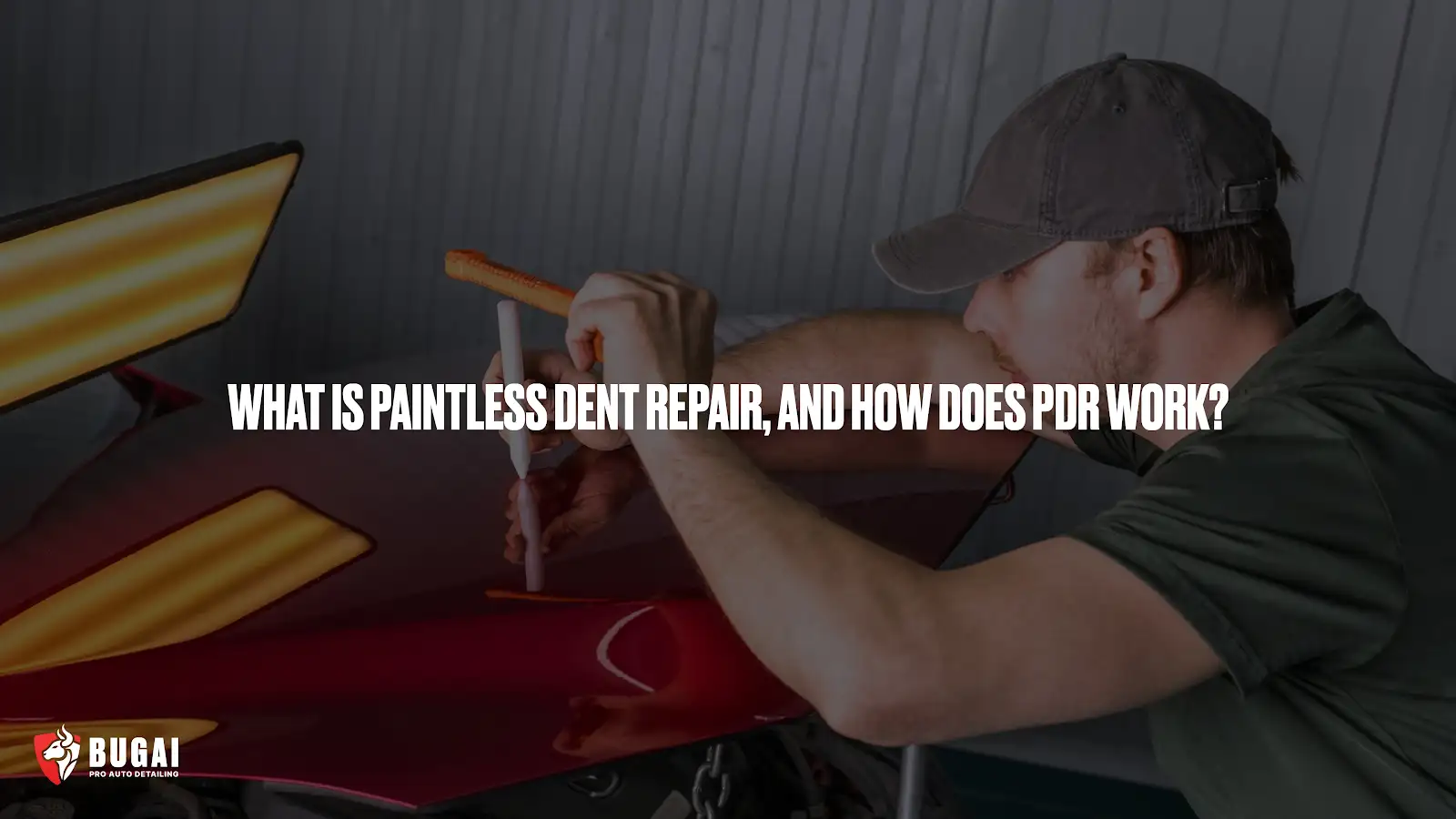
Paintless dent repair, or PDR, is a method of reshaping a dented metal panel without conventional body filler and repainting when the existing finish remains suitable.


