

.svg)
How Long Does
Car Detailing Take?
Most detailing runs a few hours to a full day — condition, vehicle size, drying, and curing decide the real drop-off window.

Quick answer: Most professional detailing takes a few hours for a focused interior or exterior service and most of a day for a full detail. Vehicle size, soil level, stain and odor work, drying, and any protection cure time extend the window — so the schedule should follow the inspected condition, not a fixed clock.
How long does car detailing usually take?
Car detailing usually takes about 1.5-3 hours for a maintenance, interior-only, or exterior-only service and about 3-6 hours for a typical full detail. Advanced paint correction, coating preparation, severe interior restoration, or large specialty vehicles can require most of a day or continue into a second day. Every figure is an estimate until the vehicle and scope are inspected.
A June 2026 detailing-time guide gives 1.5-3 hours for basic, interior, or exterior detailing; 3-6 hours for a full detail; and 6-12+ hours for paint correction or coating preparation. An older consumer guide to professional detailing gives a useful process cross-check: around one hour for wash-and-wax maintenance, four to five hours for a full detail, and eight to twelve hours or more for correction or coating work. BGI's service page states that most detailing services take 2-5 hours depending on vehicle size and condition.
| Service type | Practical planning time | What can move it higher |
|---|---|---|
| Quick maintenance or wash-and-vacuum | About 1-2 hours | Larger vehicle, wheels, cargo area, heavier soil |
| Interior-only detail | About 1.5-3 hours | Pet hair, stains, extraction, odor source, third row, drying |
| Exterior-only detail | About 1.5-3 hours | Bonded contamination, intricate wheels, polishing, protection |
| Full interior and exterior detail | About 3-6 hours | Large vehicle, neglected condition, team size, expanded scope |
| Paint correction | About 6-12+ hours | Number of stages, paint behavior, body shape, inspection and refinement |
| Coating preparation or advanced restoration | About 8-12+ hours | Correction, cure requirements, contamination, specialty materials |
Active labor and elapsed appointment time are not identical. Extraction adds drying; coatings and sealants can require cure time; stain products need dwell; teams may perform separate interior and exterior tasks in parallel. Drop-off, check-in, vehicle movement, final inspection, and customer handoff also occupy the schedule.
For an accurate BGI plan, provide the exact vehicle, photos, condition issues, and add-ons. Ask for a time range after inspection and confirm whether the quoted time means labor hours, same-day pickup, or safe-to-use time after drying or curing.
How long does an interior car detail take?
An interior car detail commonly takes about 1.5-3 hours for a standard cabin, while deep extraction, extensive pet hair, staining, odors, or a large three-row layout can extend the work to four hours or more. Drying may continue after active cleaning ends, so same-day use can be limited even when the technician has finished.
Light cleaning begins with inspection, removal of mats, and vacuuming. A well-maintained sedan with modest dust and debris can move through crevices, surfaces, glass, and final inspection near the lower end of the range. A neglected minivan or SUV creates a different sequence: multiple vacuum passes, agitation around seat rails, stain testing, controlled wet cleaning, extraction, towel changes, and ventilation.
Pet hair and sand are major time variables because they do not respond to one vacuum pass. Hair hooks into carpet fibers and seat fabric; sand drops into seams and track channels. The technician may alternate brushes, rubber tools, air, and vacuuming by section. Stains add diagnosis and dwell time. Old residue can sit beneath the visible surface, and repeated aggressive treatment may damage dye or texture without guaranteeing removal.
Odor work should not be scheduled as a quick spray. The source may be a spill, pet accident, smoke residue, damp padding, ventilation contamination, or mold. Source cleaning, extraction, specialist assessment, and drying can extend the appointment. Ozone, if proposed, also creates safety and material considerations; EPA guidance warns that ozone is a lung irritant and may be ineffective for many contaminants at concentrations within health standards.
Extraction introduces the clearest gap between labor and handoff. Carpet and upholstery must dry sufficiently to avoid transferring moisture and trapping odor. Weather, material thickness, ventilation, and solution volume all matter. Ask BGI whether seats will be dry at pickup, whether mats should remain out, and whether windows or ventilation need to be managed afterward.
The right estimate comes after photos or inspection. Tell BGI the row count, cargo use, pets, stains, odors, water intrusion, and previous cleaning attempts. A realistic time band protects both the result and the customer's transportation plan.
How long does exterior detailing take?
Exterior detailing commonly takes about 1.5-3 hours for a standard wash, decontamination, finishing, and protection scope. A simple maintenance service can be shorter, while heavy contamination, paint enhancement, correction, coating, or specialty surfaces can extend the work from several additional hours to multiple days.
| Exterior stage | Typical active-time contribution | What changes the duration |
|---|---|---|
| Inspection and pre-rinse | 10-30 minutes | Vehicle size, photos versus physical assessment, heavy mud or insects |
| Wheels and tires | 20-60 minutes | Intricate wheels, baked brake dust, large tires, prior dressings |
| Contact wash and rinse | 30-60 minutes | Surface area, body shape, roof access, specialty paint or film |
| Drying and initial check | 15-30 minutes | Water retention in trim, mirrors, grilles, badges, and seams |
| Decontamination | 30-90+ minutes | Iron, tar, sap, overspray, roughness, and material compatibility |
| Light polish or enhancement | 1-4+ hours | Paint condition, hardness, dark color, body complexity |
| Protection and final inspection | 30-90+ minutes | Product application, cure or dwell time, number of surfaces |
These tasks do not always stack neatly. A maintenance exterior may omit mechanical decontamination and polishing, while a paint-correction project includes preparation plus many hours of machine work. The June 2026 time guide lists 1.5-3 hours for typical exterior detailing and six to twelve hours or more for correction. A May 2026 paint-correction guide places one-step work around four to eight hours, two-step work around eight to twelve, and multi-stage work around twelve to twenty hours.
Active labor is different from waiting time. A chemical may need dwell before rinsing; a panel must cool before a product is used; a sealant or coating may require controlled cure. The vehicle should not be released merely because the polishing machine stopped. Final lighting inspection, residue removal, glass, trim, and aftercare are part of the appointment.
Ask BGI to separate wash/decontamination time from polishing and protection. State whether the vehicle has ceramic coating, PPF, matte paint, graphics, heavy sap, mineral spots, or overspray. Confirm the earliest safe pickup and any exposure restrictions after protection is applied. That produces a more useful plan than asking for one universal "exterior detail time."
How long does a full car detailing take?
A full car detail usually takes about 3-6 hours, and it can require most of a day when the vehicle is large or the condition is demanding. A full detail combines multiple workflows, so the sequence, number of technicians, and drying or cure requirements determine whether tasks can run in parallel.
A team can overlap interior and exterior work, but one person must perform much of the process sequentially. Even with two technicians, not every task becomes twice as fast: limited working space, product dwell, machine polishing, and quality inspection remain constraints. That is why staffing should be discussed alongside quoted hours.
The four-to-five-hour full-detail figure in the consumer guide and the three-to-six-hour 2026 range are compatible planning benchmarks. BGI's own 2-5-hour statement is broader and explicitly depends on size and condition. None should override the physical inspection.
For scheduling, reserve most of the day unless BGI confirms a narrower window. Arrange transportation, remove valuables, and ask what happens if the shop discovers condition issues. A realistic full-detail appointment is built around the vehicle — not compressed to fit an arbitrary lunch break.
How do vehicle size and layout affect detailing time?
Vehicle size and layout affect time because every additional panel, seat, track, glass area, wheel detail, storage pocket, and hard-to-reach surface creates work. The difference is not just length and width. Height, body shape, seating complexity, cargo use, and access can be more important than the badge.
| Vehicle type | Typical full-detail planning band | Layout factors that add time |
|---|---|---|
| Compact car | About 2-4 hours | Tight rear access, small crevices, hatch cargo area |
| Sedan | About 3-5 hours | Trunk, rear seating, wheel and trim complexity |
| Two-row SUV/crossover | About 4-6 hours | Taller roof, larger cargo area, more glass and carpet |
| Three-row SUV | About 4-7+ hours | Third row, seat tracks, cupholders, vents, cargo well |
| Pickup truck | About 4-6+ hours | Crew cab, large exterior panels, wheels, bed if included |
| Van or specialty vehicle | About 5-7+ hours or custom | Multiple rows, deep floor channels, height, length, specialty access |
The bands are planning estimates drawn from current detailing-time guides, not BGI promises. A clean large SUV may be faster than a compact car with severe contamination. Interior layout is especially influential. Minivans and three-row vehicles contain sliding mechanisms, floor rails, child-use zones, and deep cargo areas. Pickup pricing depends on cab configuration and whether the bed is part of the scope.
Exterior geometry changes equipment and movement. Tall roofs may require platforms or ladders. Grilles, spoilers, roof racks, complex wheels, badges, and trim hold water and increase drying and inspection. Paint correction on sharp curves or tight panels requires smaller tools and slower control.
Access should be prepared before the appointment. Remove personal cargo and child seats unless BGI agrees otherwise. Mention roof racks, bed covers, aftermarket accessories, third-row seating, pet barriers, or specialty trim. Ask whether every row, the trunk or cargo area, roof, and truck bed are included.
The most accurate schedule uses year, make, model, seating layout, current condition, and selected services. "SUV detail" is not enough information to promise a pickup time. BGI can narrow the range after reviewing photos or the vehicle and should revise the estimate transparently if the actual layout creates work that was not disclosed.
How does vehicle condition extend the appointment?
Vehicle condition extends the appointment when soil or defects require repeated passes, specialized treatment, longer dwell, additional inspection, or safe limits that slow the process. A package designed for maintained vehicles cannot absorb every neglected condition without changing time.
Pet hair, embedded sand, spills, and stains increase interior labor because they must be loosened and recovered rather than wiped once. Odors add diagnosis: smoke, pet accidents, food, moisture, and mold do not share one treatment. Extraction requires drying. Severe biological contamination may fall outside ordinary detailing and need specialist remediation.
Exterior condition creates similar effects. Tar, tree sap, iron contamination, and overspray resist normal washing and may require separate chemical or mechanical removal. Neglected wheels need additional dwell and agitation, but corrosion or pitting may remain. Oxidation, haze, and swirls shift the job from cleaning toward paint enhancement or correction. Each polishing stage adds hours after the vehicle is already washed and decontaminated.
Previous product buildup can also slow the process. Heavy tire dressing, greasy interior protectant, wax residue around trim, adhesive, or incorrectly applied coating may need careful removal. The technician must avoid turning one problem into another by using strong chemicals indiscriminately. Material testing and smaller work areas take time but reduce damage risk.
Condition is not always visible in photos. Odor, damp carpet, paint texture, prior repairs, deep scratches, and residue in seams often emerge at check-in. The shop should explain whether the timeline changes and obtain approval for expanded work. A vague promise to "make it like new today" is less credible than a staged plan with limits.
Help BGI schedule accurately by sending wide and close photos, disclosing pets, children, smoke, spills, leaks, sap, overspray, and prior repair or coating. Ask which issues are included in the base service. Honest condition information reduces surprises and protects the time allocated to quality control.
Which add-on services take the most extra time?
The add-ons that usually take the most time are paint correction, ceramic-coating preparation and curing, PPF-related preparation, deep extraction, extensive pet-hair removal, odor-source treatment, engine-bay detailing, and headlight restoration. The total depends on vehicle size, condition, staffing, and the product system.
Paint correction is the largest common time addition. A one-step enhancement can require four to eight hours including preparation; two-step work commonly takes eight to twelve; multi-stage work can reach twelve to twenty hours or more. The process cannot be reduced to machine time because washing, decontamination, masking, test spots, pad changes, residue removal, and inspection are essential.
Ceramic coating adds surface preparation, panel wipe, careful application, leveling, inspection, and cure. If the paint needs correction first, those hours are added rather than replaced. PPF work is a separate installation service; preparation, film coverage, edges, and controlled conditions affect the schedule. BGI has dedicated ceramic protection and PPF pages, so these services should be scheduled and itemized separately from a standard detail.
Interior extraction may add one to several labor hours plus drying, depending on the area and soil. Pet hair can consume substantial time because every section responds differently. Odor treatment should begin with source removal; ozone or fragrance alone should not be promised as a cure. EPA cautions that ozone can harm lungs and may not control contaminants effectively at concentrations within health standards.
Engine-bay detailing and headlight restoration can be smaller add-ons, but they still need separate setup, protection of sensitive areas, controlled product use, and inspection. Film-related work, specialty paint, aircraft, oversized vehicles, and severe contamination require custom planning.
Ask BGI for an elapsed-time schedule, not only labor hours. Which work occurs the same day? What must dry or cure? When can the vehicle be exposed to water or weather? A clear schedule prevents an "extra hour" add-on from unexpectedly turning into overnight custody.
Does mobile detailing take longer than shop detailing?
Mobile detailing can take longer or shorter than shop detailing depending on setup, utilities, weather, lighting, equipment, staffing, travel, and customer convenience. Neither format is always faster. The correct comparison is whether the environment supports the selected service safely and predictably.
Mobile service saves the customer from driving and arranging drop-off. For maintenance work at a suitable location, that convenience can make the total day feel shorter even if the technician spends time unloading hoses, power, water, lighting, towels, and machines. Travel and setup are business time, though not always visible in the service duration.
Weather introduces uncertainty. Heat can make chemicals dry too quickly; wind carries dust; rain interrupts exterior work; cold and humidity extend drying or cure. Shade, water access, power, drainage, local restrictions, and a safe working perimeter must be confirmed. Portable equipment can be excellent, but a mobile unit still has capacity and storage limits.
A fixed shop offers controlled lighting, indoor space, water and power, stable weather protection, product storage, and easier access to additional tools. Multiple technicians may work in parallel. Paint correction, ceramic coating, PPF, severe interior restoration, and jobs needing extended drying often benefit from this environment. A shop appointment, however, requires drop-off and transportation planning.
Quality does not come automatically from either setting. A well-equipped mobile professional can outperform a careless shop, and an organized shop can complete complex work more consistently than an under-resourced mobile setup. Ask about the process, equipment, contingency plan, insurance, and whether weather can reschedule the service.
BGI operates from a Roseville workshop and lists a lounge area, which supports controlled in-shop work and customer waiting when timing allows. Confirm whether the vehicle should be dropped off, whether the owner can wait, and how the shop handles drying or extended correction. Judge the format by the service requirements, not by an assumption that mobile or fixed-location work is inherently faster.
How should you plan for drop-off, drying, and pickup?
Plan for detailing by treating drop-off, active service, drying or curing, final inspection, and pickup as separate parts of the appointment. A three-hour labor estimate does not always mean the vehicle is ready to use exactly three hours after arrival.
Before drop-off:
At check-in, walk around the vehicle and record existing damage. Confirm whether trunk, cargo area, third row, roof, truck bed, jambs, wheels, extraction, polishing, or protection are included. Discuss warning lights and delicate components. Agree on a method for approving extra work.
Drying deserves its own plan. Extracted carpets and seats may remain damp; mats may need to stay out; ventilation may be recommended. Coatings or sealants can have water-exposure restrictions. The shop should explain what can be touched, driven, washed, or exposed after pickup. Do not schedule an immediate passenger trip if deep upholstery work is planned.
At pickup, inspect glass, trim, touch points, carpet, mats, wheels, and agreed problem areas. Ask the technician to explain permanent stains, remaining paint defects, and aftercare. If something is missed, raise it before leaving when the lighting and work order are available.
BGI lists Monday-Saturday hours and a Roseville workshop, but the service-specific pickup window should come from the inspection. Build a buffer into the day. A flexible handoff allows final quality control and prevents the team from rushing the last 20 minutes of a multi-hour service.
What is the bottom line on professional detailing time?
The bottom line is that most standard detailing fits within roughly 1.5-6 hours, while correction, coating preparation, severe condition work, or specialty vehicles can require a full day or longer. The selected scope and actual condition matter more than the package name.
| Planning situation | Reserve this amount of time | Confirm with BGI |
|---|---|---|
| Light maintenance | 1-2 hours | Exact inclusions and whether waiting is practical |
| Interior-only or exterior-only | 1.5-3 hours | Condition add-ons, drying, and pickup window |
| Standard full detail | 3-6 hours | Team size, parallel work, cargo/third row, final inspection |
| Heavy interior restoration | 4+ hours plus drying | Extraction, odor source, specialist limits, safe use time |
| One-step paint enhancement | Roughly 4-8 hours including preparation | Test spot, protection, and same-day feasibility |
| Two-step or multi-stage correction | 8-20+ hours | Overnight custody, stage limits, protection, and inspection |
| Ceramic coating or PPF project | Custom, often beyond a standard day | Preparation, correction, cure, film coverage, water exposure |
Ask BGI Pro Auto Detailing to inspect the vehicle and confirm turnaround after the condition and services are known. Share transportation constraints before booking, but do not force a deep job into a short window. The most reliable schedule includes time for preparation, active work, drying or curing, final inspection, and a calm customer handoff.
Build contingency into the appointment when the car is large, heavily used, or required for a fixed commitment later that day. A useful booking confirmation states the drop-off window, estimated completion range, who approves additional labor, and how the shop will communicate a delay. This is particularly important for extraction, odor-source work, correction, coatings, and film, where rushing the last stage can compromise drying, inspection, or aftercare.
At pickup, allow enough time to inspect the vehicle and receive use restrictions. Confirm when seats and carpets can be loaded normally, when the exterior can get wet, and whether the protective product has a cure window. The true end of a detailing appointment is not the moment the tools stop; it is the point at which the vehicle has passed quality control and can be used according to the completed process.
Car detailing at BGI Pro Auto Detailing in Sacramento
At BGI Pro Auto Detailing, every quote starts with an inspection of your actual vehicle — not a package name. We separate routine cleaning, condition-driven restoration, and long-term protection into clear line items, so you approve the scope in writing before work begins. Our team holds a 4.9-star rating from 380+ Sacramento-area drivers and serves Sacramento, Placer, and El Dorado counties with same-day appointments and free quotes.
- Call: (916) 460-9257
- Book: automotive detailing — send your year, make, model, and photos for a vehicle-specific estimate Related guides
Written by BGI Tint • Reviewed by Vadym Bugai, owner & lead installer.
Pricing note — accurate as of 2026: Dollar figures are U.S. market estimates collected from published industry data and vary by vehicle, condition, scope, and location. They are not BGI quotes — confirm your exact price after inspection.
Related guides
- How Much Does Car Detailing Cost? 2026 Pricing Guide
- Interior Car Detailing Cost: Pricing Factors Explained
- Paint Correction Cost: 1-Step, 2-Step and Full Correction Pricing
- What Does Car Detailing Include? Full Service Breakdown
Sources
- Orleans Auto Club - How long does it take to detail a car (June 2026) — orleansautoclub.com
- TopDetailers - 2026 U.S. car detailing cost dataset — topdetailers.com
- International Detailing Association - What is detailing — the-ida.com
Security film can delay entry and increase the effort or noise required, but it cannot guarantee that a determined intruder will never create an opening.
A written inspection-based estimate is more reliable than a single advertised average.
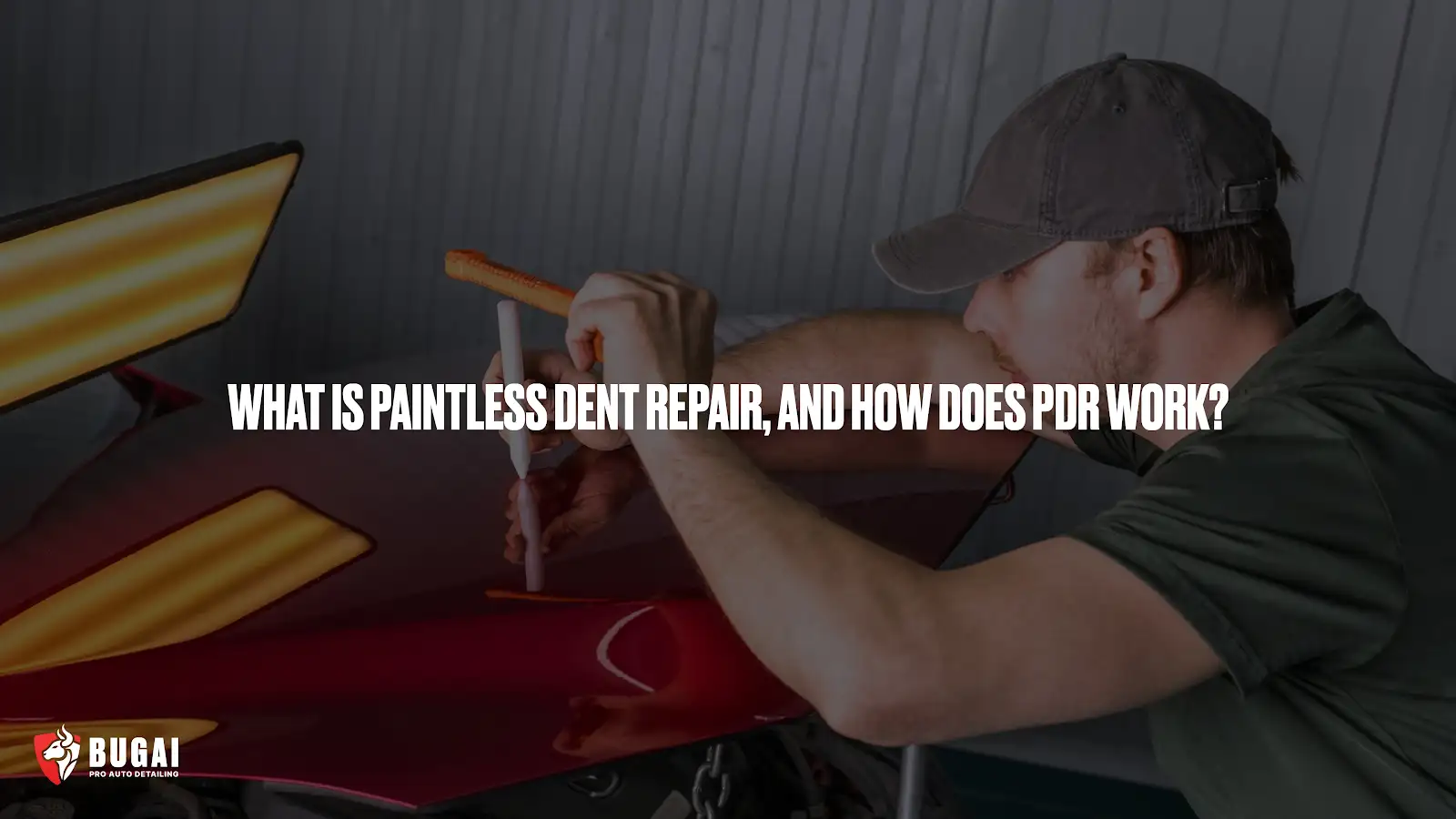
Paintless dent repair, or PDR, is a method of reshaping a dented metal panel without conventional body filler and repainting when the existing finish remains suitable.


