

.svg)
How Much Does Paintless
Dent Repair Cost?
A written inspection-based estimate is more reliable than a single advertised average.

This guide provides a practical, condition-based answer to the question in the title. It explains what a technician evaluates, how the work is performed, which limitations matter, and how to compare a written recommendation. For paintless dent repair, PDR succeeds when a technician can move the metal back in controlled increments while preserving a suitable paint finish. BGI Pro Auto Detailing serves Roseville and the greater Sacramento area; any price or time shown is a dated benchmark or published starting point, not a guaranteed quote without inspection.
How much does paintless dent repair cost on average?
In 2026, published U.S. market guides commonly place a simple ding around $75-$150, a medium dent around $150-$400, and larger or sharply creased work around $300-$800 or more; hail repairs can reach four figures because many dents and panels are involved. These are market benchmarks, not a binding BGI quote. The decision should account for dated US benchmark ranges by simple ding, medium dent, complex damage, and hail work, and that inspection is required for a reliable estimate. These details determine eligibility, preparation, labor, expected appearance, and the limits that should be written into the estimate or work order.
Good workmanship begins with diagnosis and a clearly defined outcome. For paintless dent repair, PDR succeeds when a technician can move the metal back in controlled increments while preserving a suitable paint finish. Document the starting condition, protect adjacent materials, and define the acceptance check before work begins. If the painted metal panel responds differently from the test area, the method should be changed instead of forced.
According to I-CAR's PDR guidance, I-CAR identifies paint condition, access, damage shape and size, edge proximity, and prior refinishing as material PDR considerations. Apply that guidance only within its stated scope: product instructions govern the named product, insurance summaries do not replace a policy, and test results apply to the tested configuration. The authority supports the decision criteria; it does not turn a conditional repair, installation, or price into a universal guarantee.
A clear estimate should make the decision easier, not hide the variables. Confirm the included steps, exclusions, change-order triggers, estimated downtime, aftercare, and warranty. A photo can support triage, but lighting, reflections, touch, panel construction, and access determine the final plan. Inspect the panel from several angles under a reflection light, confirm bodyline continuity, and check that trim and corrosion protection were restored correctly.
When safety, factory finish, glass integrity, or warranty coverage is involved, restraint is part of professional work. The main risk variables are paint condition, metal stretch, panel access, bodyline geometry, previous repair, and technician control. When the condition falls outside the selected method, changing the plan protects the painted panel and produces a more defensible result. BGI Pro Auto Detailing can inspect the condition at our Roseville shop and explain the appropriate scope without turning a published starting point or benchmark into a guaranteed quote.
| Factor | Why it matters |
|---|---|
| Dated US benchmark ranges by simple ding | Changes eligibility or the safest method |
| Medium dent | Changes labor, access, or preparation |
| Complex damage | Changes expected appearance or performance |
| Hail work | Changes risk, timing, or warranty scope |
| That inspection is required for a reliable estimate | Requires product-specific confirmation |
How is PDR cost per dent calculated?
The price varies because base pricing, size increments, depth, sharpness, panel material, bodyline involvement, access, bracing, and additional-dent adjustments. A written inspection-based estimate is therefore more reliable than a single advertised average. The decision should account for base pricing, size increments, depth, sharpness, panel material, bodyline involvement, access, bracing, and additional-dent adjustments. These details determine eligibility, preparation, labor, expected appearance, and the limits that should be written into the estimate or work order.
The safest recommendation is based on evidence from the actual painted panel, not a generic product claim. For paintless dent repair, PDR succeeds when a technician can move the metal back in controlled increments while preserving a suitable paint finish. Document the starting condition, protect adjacent materials, and define the acceptance check before work begins. If the painted metal panel responds differently from the test area, the method should be changed instead of forced.
According to I-CAR's no-drill access guidance, I-CAR advises against drilling access holes for PDR because drilling can alter structural parts and create corrosion concerns. Apply that guidance only within its stated scope: product instructions govern the named product, insurance summaries do not replace a policy, and test results apply to the tested configuration. The authority supports the decision criteria; it does not turn a conditional repair, installation, or price into a universal guarantee.
The customer can reduce surprises by confirming the decision criteria in advance. Confirm the included steps, exclusions, change-order triggers, estimated downtime, aftercare, and warranty. A photo can support triage, but lighting, reflections, touch, panel construction, and access determine the final plan. Inspect the panel from several angles under a reflection light, confirm bodyline continuity, and check that trim and corrosion protection were restored correctly.
The main red flag is certainty without inspection. The main risk variables are paint condition, metal stretch, panel access, bodyline geometry, previous repair, and technician control. When the condition falls outside the selected method, changing the plan protects the painted panel and produces a more defensible result. BGI Pro Auto Detailing can inspect the condition at our Roseville shop and explain the appropriate scope without turning a published starting point or benchmark into a guaranteed quote.
| Factor | Why it matters |
|---|---|
| Base pricing | Changes eligibility or the safest method |
| Size increments | Changes labor, access, or preparation |
| Depth | Changes expected appearance or performance |
| Sharpness | Changes risk, timing, or warranty scope |
| Panel material | Requires product-specific confirmation |
| Bodyline involvement | Should be documented in the estimate |
How do dent size and depth affect paintless dent removal cost?
The price varies when a shallow coin-sized ding is compared with a larger or sharply creased dent. A written inspection-based estimate is therefore more reliable than a single advertised average. The decision should account for shallow coin-sized dings with larger or sharply creased dents, and why diameter alone does not determine labor. These details determine eligibility, preparation, labor, expected appearance, and the limits that should be written into the estimate or work order.
A reliable plan separates eligibility, procedure, expected result, and residual risk. For paintless dent repair, PDR succeeds when a technician can move the metal back in controlled increments while preserving a suitable paint finish. Document the starting condition, protect adjacent materials, and define the acceptance check before work begins. If the painted metal panel responds differently from the test area, the method should be changed instead of forced.
According to BGI Pro Auto Detailing's PDR service page, BGI publishes a $99 starting point, explains that size, depth, and accessibility affect the quote, and requires inspection for an exact estimate. Apply that guidance only within its stated scope: product instructions govern the named product, insurance summaries do not replace a policy, and test results apply to the tested configuration. The authority supports the decision criteria; it does not turn a conditional repair, installation, or price into a universal guarantee.
Quality is easier to judge when the expected result and limitations are recorded before service. Confirm the included steps, exclusions, change-order triggers, estimated downtime, aftercare, and warranty. A photo can support triage, but lighting, reflections, touch, panel construction, and access determine the final plan. Inspect the panel from several angles under a reflection light, confirm bodyline continuity, and check that trim and corrosion protection were restored correctly.
The best-value option is not necessarily the fastest or the cheapest one. The main risk variables are paint condition, metal stretch, panel access, bodyline geometry, previous repair, and technician control. When the condition falls outside the selected method, changing the plan protects the painted panel and produces a more defensible result. BGI Pro Auto Detailing can inspect the condition at our Roseville shop and explain the appropriate scope without turning a published starting point or benchmark into a guaranteed quote.
| Factor | Why it matters |
|---|---|
| Shallow coin-sized dings with larger or sharply creased dents | Changes eligibility or the safest method |
| Why diameter alone does not determine labor | Changes labor, access, or preparation |
| Quality check | Changes expected appearance or performance |
| Written scope | Changes risk, timing, or warranty scope |
Why does dent location change the PDR estimate?
The answer is determined by edges, bodylines, double panels, roof rails, doors, quarter panels, aluminum panels, and restricted tool access. Those factors should be checked together rather than treated as isolated details. The decision should account for edges, bodylines, double panels, roof rails, doors, quarter panels, aluminum panels, and restricted tool access. These details determine eligibility, preparation, labor, expected appearance, and the limits that should be written into the estimate or work order.
A professional assessment starts with the whole system, not the most obvious symptom. For paintless dent repair, PDR succeeds when a technician can move the metal back in controlled increments while preserving a suitable paint finish. Document the starting condition, protect adjacent materials, and define the acceptance check before work begins. If the painted metal panel responds differently from the test area, the method should be changed instead of forced.
According to Progressive's hail-coverage overview, Progressive explains that hail damage is generally handled through comprehensive coverage, subject to the policy and deductible. Apply that guidance only within its stated scope: product instructions govern the named product, insurance summaries do not replace a policy, and test results apply to the tested configuration. The authority supports the decision criteria; it does not turn a conditional repair, installation, or price into a universal guarantee.
For an owner, the most useful next step is to request a written scope. Confirm the included steps, exclusions, change-order triggers, estimated downtime, aftercare, and warranty. A photo can support triage, but lighting, reflections, touch, panel construction, and access determine the final plan. Inspect the panel from several angles under a reflection light, confirm bodyline continuity, and check that trim and corrosion protection were restored correctly.
Do not treat a quick online rule as a guarantee. The main risk variables are paint condition, metal stretch, panel access, bodyline geometry, previous repair, and technician control. When the condition falls outside the selected method, changing the plan protects the painted panel and produces a more defensible result.
| Factor | Why it matters |
|---|---|
| Edges | Changes eligibility or the safest method |
| Bodylines | Changes labor, access, or preparation |
| Double panels | Changes expected appearance or performance |
| Roof rails | Changes risk, timing, or warranty scope |
| Doors | Requires product-specific confirmation |
| Quarter panels | Should be documented in the estimate |
How does paint condition affect PDR pricing and eligibility?
The answer is determined by cracked paint, previous refinishing, filler, corrosion, and paint flexibility. Those factors should be checked together rather than treated as isolated details. The decision should account for cracked paint, previous refinishing, filler, corrosion, and paint flexibility, and when conventional repair may be safer. These details determine eligibility, preparation, labor, expected appearance, and the limits that should be written into the estimate or work order.
The useful distinction is between what can be seen immediately and what must be verified before work begins. For paintless dent repair, PDR succeeds when a technician can move the metal back in controlled increments while preserving a suitable paint finish. Document the starting condition, protect adjacent materials, and define the acceptance check before work begins. If the painted metal panel responds differently from the test area, the method should be changed instead of forced.
According to I-CAR's PDR guidance, I-CAR identifies paint condition, access, damage shape and size, edge proximity, and prior refinishing as material PDR considerations. Apply that guidance only within its stated scope: product instructions govern the named product, insurance summaries do not replace a policy, and test results apply to the tested configuration. The authority supports the decision criteria; it does not turn a conditional repair, installation, or price into a universal guarantee.
Before authorizing the work, turn the recommendation into a short checklist. Confirm the included steps, exclusions, change-order triggers, estimated downtime, aftercare, and warranty. A photo can support triage, but lighting, reflections, touch, panel construction, and access determine the final plan. Inspect the panel from several angles under a reflection light, confirm bodyline continuity, and check that trim and corrosion protection were restored correctly.
A conservative technician will explain both the likely result and the limit of the method. The main risk variables are paint condition, metal stretch, panel access, bodyline geometry, previous repair, and technician control. When the condition falls outside the selected method, changing the plan protects the painted panel and produces a more defensible result.
How much does hail-damage PDR cost?
The price varies because panel count, dent density, size distribution, roof access, trim removal, insurer estimating, and supplements. A written inspection-based estimate is therefore more reliable than a single advertised average. The decision should account for panel count, dent density, size distribution, roof access, trim removal, insurer estimating, and supplements, and avoid unsupported flat totals. These details determine eligibility, preparation, labor, expected appearance, and the limits that should be written into the estimate or work order.
In practice, the variables interact, so they should be evaluated in a deliberate order. For paintless dent repair, PDR succeeds when a technician can move the metal back in controlled increments while preserving a suitable paint finish. Document the starting condition, protect adjacent materials, and define the acceptance check before work begins. If the painted metal panel responds differently from the test area, the method should be changed instead of forced.
According to I-CAR's no-drill access guidance, I-CAR advises against drilling access holes for PDR because drilling can alter structural parts and create corrosion concerns. Apply that guidance only within its stated scope: product instructions govern the named product, insurance summaries do not replace a policy, and test results apply to the tested configuration. The authority supports the decision criteria; it does not turn a conditional repair, installation, or price into a universal guarantee.
A clear estimate should make the decision easier, not hide the variables. Confirm the included steps, exclusions, change-order triggers, estimated downtime, aftercare, and warranty. A photo can support triage, but lighting, reflections, touch, panel construction, and access determine the final plan. Inspect the panel from several angles under a reflection light, confirm bodyline continuity, and check that trim and corrosion protection were restored correctly.
When safety, factory finish, glass integrity, or warranty coverage is involved, restraint is part of professional work. The main risk variables are paint condition, metal stretch, panel access, bodyline geometry, previous repair, and technician control. When the condition falls outside the selected method, changing the plan protects the painted panel and produces a more defensible result. BGI Pro Auto Detailing can inspect the condition at our Roseville shop and explain the appropriate scope without turning a published starting point or benchmark into a guaranteed quote.
Can a paintless dent repair cost calculator be accurate?
Yes in some cases, but what online calculators can estimate and which visual or tactile factors require technician inspection must be evaluated before the answer is final. The safe method also depends on paint condition, metal stretch, panel access, bodyline geometry, previous repair, and technician control. The decision should account for what online calculators can estimate and which visual or tactile factors require technician inspection. These details determine eligibility, preparation, labor, expected appearance, and the limits that should be written into the estimate or work order.
Good workmanship begins with diagnosis and a clearly defined outcome. For paintless dent repair, PDR succeeds when a technician can move the metal back in controlled increments while preserving a suitable paint finish. Document the starting condition, protect adjacent materials, and define the acceptance check before work begins. If the painted metal panel responds differently from the test area, the method should be changed instead of forced.
According to BGI Pro Auto Detailing's PDR service page, BGI publishes a $99 starting point, explains that size, depth, and accessibility affect the quote, and requires inspection for an exact estimate. Apply that guidance only within its stated scope: product instructions govern the named product, insurance summaries do not replace a policy, and test results apply to the tested configuration. The authority supports the decision criteria; it does not turn a conditional repair, installation, or price into a universal guarantee.
The customer can reduce surprises by confirming the decision criteria in advance. Confirm the included steps, exclusions, change-order triggers, estimated downtime, aftercare, and warranty. A photo can support triage, but lighting, reflections, touch, panel construction, and access determine the final plan. Inspect the panel from several angles under a reflection light, confirm bodyline continuity, and check that trim and corrosion protection were restored correctly.
The main red flag is certainty without inspection. The main risk variables are paint condition, metal stretch, panel access, bodyline geometry, previous repair, and technician control. When the condition falls outside the selected method, changing the plan protects the painted panel and produces a more defensible result. BGI Pro Auto Detailing can inspect the condition at our Roseville shop and explain the appropriate scope without turning a published starting point or benchmark into a guaranteed quote.
Does insurance cover paintless dent repair?
It may, but the result is conditional. The immediate considerations are comprehensive versus collision scenarios in general terms, deductibles, estimates, repair-shop choice, and the need to confirm policy details, while paint condition, metal stretch, panel access, bodyline geometry, previous repair, and technician control can change the final outcome. The decision should account for comprehensive versus collision scenarios in general terms, deductibles, estimates, repair-shop choice, and the need to confirm policy details. These details determine eligibility, preparation, labor, expected appearance, and the limits that should be written into the estimate or work order.
The safest recommendation is based on evidence from the actual painted panel, not a generic product claim. For paintless dent repair, PDR succeeds when a technician can move the metal back in controlled increments while preserving a suitable paint finish. Document the starting condition, protect adjacent materials, and define the acceptance check before work begins. If the painted metal panel responds differently from the test area, the method should be changed instead of forced.
According to Progressive's hail-coverage overview, Progressive explains that hail damage is generally handled through comprehensive coverage, subject to the policy and deductible. Apply that guidance only within its stated scope: product instructions govern the named product, insurance summaries do not replace a policy, and test results apply to the tested configuration. The authority supports the decision criteria; it does not turn a conditional repair, installation, or price into a universal guarantee.
Quality is easier to judge when the expected result and limitations are recorded before service. Confirm the included steps, exclusions, change-order triggers, estimated downtime, aftercare, and warranty. A photo can support triage, but lighting, reflections, touch, panel construction, and access determine the final plan. Inspect the panel from several angles under a reflection light, confirm bodyline continuity, and check that trim and corrosion protection were restored correctly.
The best-value option is not necessarily the fastest or the cheapest one. The main risk variables are paint condition, metal stretch, panel access, bodyline geometry, previous repair, and technician control. When the condition falls outside the selected method, changing the plan protects the painted panel and produces a more defensible result.
What should a written PDR estimate include?
A useful checklist covers panels, dent count, access, trim labor, exclusions, paint risk, taxes, timeline, and warranty. It should be recorded clearly enough for the customer to compare scope and risk. The decision should account for a checklist for panels, dent count, access, trim labor, exclusions, paint risk, taxes, timeline, and warranty. These details determine eligibility, preparation, labor, expected appearance, and the limits that should be written into the estimate or work order.
A reliable plan separates eligibility, procedure, expected result, and residual risk. For paintless dent repair, PDR succeeds when a technician can move the metal back in controlled increments while preserving a suitable paint finish. Document the starting condition, protect adjacent materials, and define the acceptance check before work begins. If the painted metal panel responds differently from the test area, the method should be changed instead of forced.
According to I-CAR's PDR guidance, I-CAR identifies paint condition, access, damage shape and size, edge proximity, and prior refinishing as material PDR considerations. Apply that guidance only within its stated scope: product instructions govern the named product, insurance summaries do not replace a policy, and test results apply to the tested configuration. The authority supports the decision criteria; it does not turn a conditional repair, installation, or price into a universal guarantee.
For an owner, the most useful next step is to request a written scope. Confirm the included steps, exclusions, change-order triggers, estimated downtime, aftercare, and warranty. A photo can support triage, but lighting, reflections, touch, panel construction, and access determine the final plan. Inspect the panel from several angles under a reflection light, confirm bodyline continuity, and check that trim and corrosion protection were restored correctly.
Do not treat a quick online rule as a guarantee. The main risk variables are paint condition, metal stretch, panel access, bodyline geometry, previous repair, and technician control. When the condition falls outside the selected method, changing the plan protects the painted panel and produces a more defensible result.
- Review the checklist for panels before committing to the method.
- Include the dent count in the written scope.
- Monitor access constraints during the work.
- Confirm all trim labor in the final acceptance check.
What is the bottom line on average PDR cost?
The price depends on the documented damage and access variables, a compact estimator-input table, and the need for an in-person inspection before work is approved. A written inspection-based estimate is therefore more reliable than a single advertised average. The decision should account for the documented damage and access variables, a compact estimator-input table, and the need for an in-person inspection before work is approved. These details determine eligibility, preparation, labor, expected appearance, and the limits that should be written into the estimate or work order.
A professional assessment starts with the whole system, not the most obvious symptom. For paintless dent repair, PDR succeeds when a technician can move the metal back in controlled increments while preserving a suitable paint finish. Document the starting condition, protect adjacent materials, and define the acceptance check before work begins. If the painted metal panel responds differently from the test area, the method should be changed instead of forced.
According to I-CAR's no-drill access guidance, I-CAR advises against drilling access holes for PDR because drilling can alter structural parts and create corrosion concerns. Apply that guidance only within its stated scope: product instructions govern the named product, insurance summaries do not replace a policy, and test results apply to the tested configuration. The authority supports the decision criteria; it does not turn a conditional repair, installation, or price into a universal guarantee.
Before authorizing the work, turn the recommendation into a short checklist. Confirm the included steps, exclusions, change-order triggers, estimated downtime, aftercare, and warranty. A photo can support triage, but lighting, reflections, touch, panel construction, and access determine the final plan. Inspect the panel from several angles under a reflection light, confirm bodyline continuity, and check that trim and corrosion protection were restored correctly.
A conservative technician will explain both the likely result and the limit of the method. The main risk variables are paint condition, metal stretch, panel access, bodyline geometry, previous repair, and technician control. When the condition falls outside the selected method, changing the plan protects the painted panel and produces a more defensible result. BGI Pro Auto Detailing can inspect the condition at our Roseville shop and explain the appropriate scope without turning a published starting point or benchmark into a guaranteed quote.
- Review price factors before committing to the method.
- Include a compact estimator-input table in the written scope.
- Confirm the recommendation with an in-person inspection before approving the work.
- Use the written scope in the final acceptance check.
Security film can delay entry and increase the effort or noise required, but it cannot guarantee that a determined intruder will never create an opening.
A written inspection-based estimate is more reliable than a single advertised average.
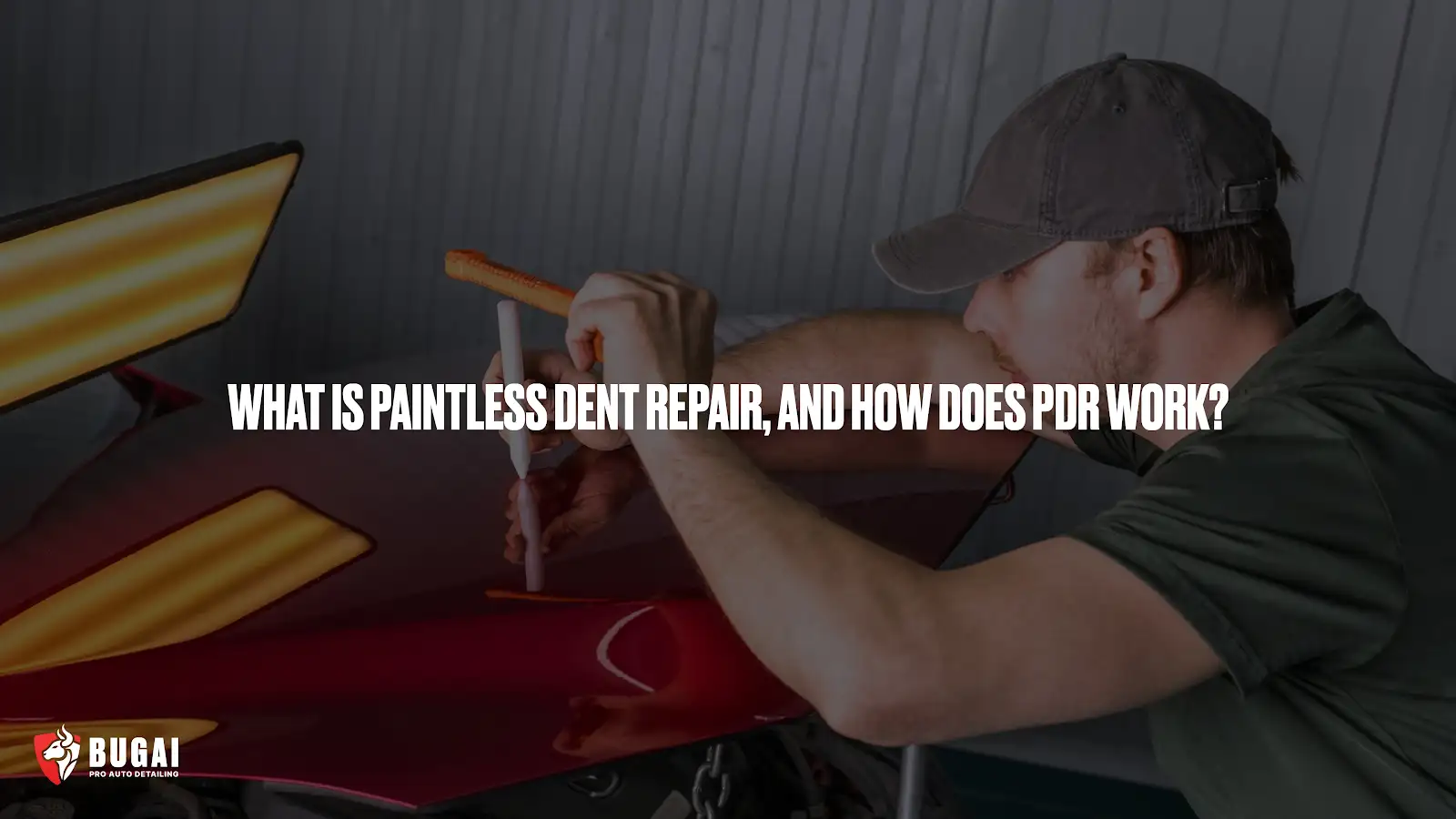
Paintless dent repair, or PDR, is a method of reshaping a dented metal panel without conventional body filler and repainting when the existing finish remains suitable.


