


How Long Does
A straightforward eligible chip repair often takes about 30 minutes after inspection, although crack complexity, contamination, access, weather, and multiple impact points can extend the appointment.

This guide provides a practical, condition-based answer to the question in the title. It explains what a technician evaluates, how the work is performed, which limitations matter, and how to compare a written recommendation. For windshield repair, repair is a structural stabilization process for eligible laminated-glass damage, not a promise that every visible mark will disappear. BGI Pro Auto Detailing serves North Highlands and the greater Sacramento area; any price or time shown is a dated benchmark or published starting point, not a guaranteed quote without inspection.
How long does windshield chip repair take?
A straightforward eligible chip repair often takes about 30 minutes after inspection, although crack complexity, contamination, access, weather, and multiple impact points can extend the appointment. The decision should account for the BGI and major-provider published time ranges after live verification, and that many eligible repairs take about 30 minutes but damage and conditions vary. These details determine eligibility, preparation, labor, expected appearance, and the limits that should be written into the estimate or work order.
Good workmanship begins with diagnosis and a clearly defined outcome. For windshield repair, repair is a structural stabilization process for eligible laminated-glass damage, not a promise that every visible mark will disappear. Document the starting condition, protect adjacent materials, and define the acceptance check before work begins. If the laminated windshield and damaged area responds differently from the test area, the method should be changed instead of forced.
According to BGI Pro Auto Detailing's rock-chip repair page, BGI publishes rock-chip repair starting at $79 and says a typical eligible repair takes about 30 minutes after inspection. Apply that guidance only within its stated scope: product instructions govern the named product, insurance summaries do not replace a policy, and test results apply to the tested configuration. The authority supports the decision criteria; it does not turn a conditional repair, installation, or price into a universal guarantee.
For an owner, the most useful next step is to request a written scope. Confirm the included steps, exclusions, change-order triggers, estimated downtime, aftercare, and warranty. Prompt inspection matters because dirt, moisture, temperature changes, vibration, and normal body flex can reduce repairability. Document the impact point, legs, dimensions, edge distance, sightline, sensor area, layer depth, and contamination before choosing repair or replacement.
Do not treat a quick online rule as a guarantee. The main risk variables are damage type, dimensions, impact point, crack legs, depth, edge proximity, driver sightline, contamination, age, sensor area, and policy terms. When the condition falls outside the selected method, changing the plan protects the windshield and produces a more defensible result. BGI Pro Auto Detailing can inspect the condition in North Highlands and explain the appropriate scope without turning a published starting point or benchmark into a guaranteed quote.
What happens during a windshield repair appointment?
The answer is determined by inspection, preparation, moisture and debris removal, bridge setup, vacuum and pressure cycles, resin fill, UV cure, pit fill, polish, and final check. Those factors should be checked together rather than treated as isolated details. The decision should account for inspection, preparation, moisture and debris removal, bridge setup, vacuum and pressure cycles, resin fill, UV cure, pit fill, polish, and final check. These details determine eligibility, preparation, labor, expected appearance, and the limits that should be written into the estimate or work order.
The safest recommendation is based on evidence from the actual windshield damage, not a generic product claim. For windshield repair, repair is a structural stabilization process for eligible laminated-glass damage, not a promise that every visible mark will disappear. Document the starting condition, protect adjacent materials, and define the acceptance check before work begins. If the laminated windshield and damaged area responds differently from the test area, the method should be changed instead of forced.
According to BGI Pro Auto Detailing's rock-chip repair page, BGI publishes rock-chip repair starting at $79 and says a typical eligible repair takes about 30 minutes after inspection. Apply that guidance only within its stated scope: product instructions govern the named product, insurance summaries do not replace a policy, and test results apply to the tested configuration. The authority supports the decision criteria; it does not turn a conditional repair, installation, or price into a universal guarantee.
Before authorizing the work, turn the recommendation into a short checklist. Confirm the included steps, exclusions, change-order triggers, estimated downtime, aftercare, and warranty. Prompt inspection matters because dirt, moisture, temperature changes, vibration, and normal body flex can reduce repairability. Document the impact point, legs, dimensions, edge distance, sightline, sensor area, layer depth, and contamination before choosing repair or replacement.
A conservative technician will explain both the likely result and the limit of the method. The main risk variables are damage type, dimensions, impact point, crack legs, depth, edge proximity, driver sightline, contamination, age, sensor area, and policy terms. When the condition falls outside the selected method, changing the plan protects the windshield and produces a more defensible result.
- Inspect: assess the starting condition and confirm service eligibility. Check the observed result before moving to the next stage.
- Plan: Preparation. Check the observed result before moving to the next stage.
- Set up: Moisture. Check the observed result before moving to the next stage.
- Perform: Debris removal. Check the observed result before moving to the next stage.
- Refine: Bridge setup. Check the observed result before moving to the next stage.
- Verify: Vacuum. Check the observed result before moving to the next stage.
How long does a windshield crack repair take?
The timing varies with scope and condition. A realistic estimate separates how crack length, legs, contamination, edge location, resin travel, and provider limits can extend time or require replacement, and an inspection is the responsible way to set the appointment window. The decision should account for how crack length, legs, contamination, edge location, resin travel, and provider limits can extend time or require replacement. These details determine eligibility, preparation, labor, expected appearance, and the limits that should be written into the estimate or work order.
A reliable plan separates eligibility, procedure, expected result, and residual risk. For windshield repair, repair is a structural stabilization process for eligible laminated-glass damage, not a promise that every visible mark will disappear. Document the starting condition, protect adjacent materials, and define the acceptance check before work begins. If the laminated windshield and damaged area responds differently from the test area, the method should be changed instead of forced.
According to AAA's windshield cost overview, AAA reports common chip-repair pricing around $60-$100 and a broader repair range around $50-$150, depending on damage and market. Apply that guidance only within its stated scope: product instructions govern the named product, insurance summaries do not replace a policy, and test results apply to the tested configuration. The authority supports the decision criteria; it does not turn a conditional repair, installation, or price into a universal guarantee.
A clear estimate should make the decision easier, not hide the variables. Confirm the included steps, exclusions, change-order triggers, estimated downtime, aftercare, and warranty. Prompt inspection matters because dirt, moisture, temperature changes, vibration, and normal body flex can reduce repairability. Document the impact point, legs, dimensions, edge distance, sightline, sensor area, layer depth, and contamination before choosing repair or replacement.
When safety, factory finish, glass integrity, or warranty coverage is involved, restraint is part of professional work. The main risk variables are damage type, dimensions, impact point, crack legs, depth, edge proximity, driver sightline, contamination, age, sensor area, and policy terms. When the condition falls outside the selected method, changing the plan protects the windshield and produces a more defensible result.
| Factor | Why it matters |
|---|---|
| How crack length | Changes eligibility or the safest method |
| Legs | Changes labor, access, or preparation |
| Contamination | Changes expected appearance or performance |
| Edge location | Changes risk, timing, or warranty scope |
| Resin travel | Requires product-specific confirmation |
| And provider limits can extend time or require replacement | Should be documented in the estimate |
How long does windshield repair resin take to cure?
The timing varies with scope and condition. A realistic estimate separates UV-cured resin versus consumer adhesive assumptions, and an inspection is the responsible way to set the appointment window. The decision should account for UV-cured resin versus consumer adhesive assumptions, and technician curing during service from aftercare instructions. These details determine eligibility, preparation, labor, expected appearance, and the limits that should be written into the estimate or work order.
A professional assessment starts with the whole system, not the most obvious symptom. For windshield repair, repair is a structural stabilization process for eligible laminated-glass damage, not a promise that every visible mark will disappear. Document the starting condition, protect adjacent materials, and define the acceptance check before work begins. If the laminated windshield and damaged area responds differently from the test area, the method should be changed instead of forced.
According to Progressive's glass-coverage guidance, Progressive explains that comprehensive coverage commonly applies to non-collision glass damage and that deductibles and state rules vary. Apply that guidance only within its stated scope: product instructions govern the named product, insurance summaries do not replace a policy, and test results apply to the tested configuration. The authority supports the decision criteria; it does not turn a conditional repair, installation, or price into a universal guarantee.
The customer can reduce surprises by confirming the decision criteria in advance. Confirm the included steps, exclusions, change-order triggers, estimated downtime, aftercare, and warranty. Prompt inspection matters because dirt, moisture, temperature changes, vibration, and normal body flex can reduce repairability. Document the impact point, legs, dimensions, edge distance, sightline, sensor area, layer depth, and contamination before choosing repair or replacement.
The main red flag is certainty without inspection. The main risk variables are damage type, dimensions, impact point, crack legs, depth, edge proximity, driver sightline, contamination, age, sensor area, and policy terms. When the condition falls outside the selected method, changing the plan protects the windshield and produces a more defensible result.
Can you drive immediately after a chip repair?
Yes in many cases, but customers must follow the technician's instructions before driving. The safe method also depends on damage type, dimensions, impact point, crack legs, depth, edge proximity, driver sightline, contamination, age, sensor area, and policy terms. The decision should distinguish the prompt-driving guidance after a successful repair from the longer safe-drive-away time that may apply after replacement. These details determine eligibility, preparation, labor, expected appearance, and the limits that should be written into the estimate or work order.
The useful distinction is between what can be seen immediately and what must be verified before work begins. For windshield repair, repair is a structural stabilization process for eligible laminated-glass damage, not a promise that every visible mark will disappear. Document the starting condition, protect adjacent materials, and define the acceptance check before work begins. If the laminated windshield and damaged area responds differently from the test area, the method should be changed instead of forced.
According to California Department of Insurance auto guide, California's Department of Insurance distinguishes comprehensive from collision coverage and emphasizes the controlling role of policy deductibles. Apply that guidance only within its stated scope: product instructions govern the named product, insurance summaries do not replace a policy, and test results apply to the tested configuration. The authority supports the decision criteria; it does not turn a conditional repair, installation, or price into a universal guarantee.
Quality is easier to judge when the expected result and limitations are recorded before service. Confirm the included steps, exclusions, change-order triggers, estimated downtime, aftercare, and warranty. Prompt inspection matters because dirt, moisture, temperature changes, vibration, and normal body flex can reduce repairability. Document the impact point, legs, dimensions, edge distance, sightline, sensor area, layer depth, and contamination before choosing repair or replacement.
The best-value option is not necessarily the fastest or the cheapest one. The main risk variables are damage type, dimensions, impact point, crack legs, depth, edge proximity, driver sightline, contamination, age, sensor area, and policy terms. When the condition falls outside the selected method, changing the plan protects the windshield and produces a more defensible result.
| Factor | Why it matters |
|---|---|
| That successful repair usually permits prompt driving | Changes eligibility or the safest method |
| But customers must follow the technician's instructions | Changes labor, access, or preparation |
| Repair from replacement safe-drive-away time | Changes expected appearance or performance |
| Written scope | Changes risk, timing, or warranty scope |
Which factors make windshield repair take longer?
The answer is determined by multiple chips, complex breaks, moisture, cold or heat, contamination, difficult access, mobile setup, and insurer authorization. Those factors should be checked together rather than treated as isolated details. The decision should account for multiple chips, complex breaks, moisture, cold or heat, contamination, difficult access, mobile setup, and insurer authorization. These details determine eligibility, preparation, labor, expected appearance, and the limits that should be written into the estimate or work order.
In practice, the variables interact, so they should be evaluated in a deliberate order. For windshield repair, repair is a structural stabilization process for eligible laminated-glass damage, not a promise that every visible mark will disappear. Document the starting condition, protect adjacent materials, and define the acceptance check before work begins. If the laminated windshield and damaged area responds differently from the test area, the method should be changed instead of forced.
According to BGI Pro Auto Detailing's rock-chip repair page, BGI publishes rock-chip repair starting at $79 and says a typical eligible repair takes about 30 minutes after inspection. Apply that guidance only within its stated scope: product instructions govern the named product, insurance summaries do not replace a policy, and test results apply to the tested configuration. The authority supports the decision criteria; it does not turn a conditional repair, installation, or price into a universal guarantee.
For an owner, the most useful next step is to request a written scope. Confirm the included steps, exclusions, change-order triggers, estimated downtime, aftercare, and warranty. Prompt inspection matters because dirt, moisture, temperature changes, vibration, and normal body flex can reduce repairability. Document the impact point, legs, dimensions, edge distance, sightline, sensor area, layer depth, and contamination before choosing repair or replacement.
Do not treat a quick online rule as a guarantee. The main risk variables are damage type, dimensions, impact point, crack legs, depth, edge proximity, driver sightline, contamination, age, sensor area, and policy terms. When the condition falls outside the selected method, changing the plan protects the windshield and produces a more defensible result.
Does mobile windshield repair take longer?
It may, but the result is conditional. The immediate considerations are travel window, setup, weather, covered workspace, and on-glass work time, while damage type, dimensions, impact point, crack legs, depth, edge proximity, driver sightline, contamination, age, sensor area, and policy terms can change the final outcome. The decision should account for travel window, setup, weather, covered workspace, and on-glass work time, and present convenience and scheduling trade-offs. These details determine eligibility, preparation, labor, expected appearance, and the limits that should be written into the estimate or work order.
Good workmanship begins with diagnosis and a clearly defined outcome. For windshield repair, repair is a structural stabilization process for eligible laminated-glass damage, not a promise that every visible mark will disappear. Document the starting condition, protect adjacent materials, and define the acceptance check before work begins. If the laminated windshield and damaged area responds differently from the test area, the method should be changed instead of forced.
According to Safelite's windshield-repair criteria, Safelite lists typical repair criteria such as a crack under six inches, a small impact point, no more than three chips, and damage outside a sensor area. Apply that guidance only within its stated scope: product instructions govern the named product, insurance summaries do not replace a policy, and test results apply to the tested configuration. The authority supports the decision criteria; it does not turn a conditional repair, installation, or price into a universal guarantee.
Before authorizing the work, turn the recommendation into a short checklist. Confirm the included steps, exclusions, change-order triggers, estimated downtime, aftercare, and warranty. Prompt inspection matters because dirt, moisture, temperature changes, vibration, and normal body flex can reduce repairability. Document the impact point, legs, dimensions, edge distance, sightline, sensor area, layer depth, and contamination before choosing repair or replacement.
A conservative technician will explain both the likely result and the limit of the method. The main risk variables are damage type, dimensions, impact point, crack legs, depth, edge proximity, driver sightline, contamination, age, sensor area, and policy terms. When the condition falls outside the selected method, changing the plan protects the windshield and produces a more defensible result.
How should you prepare for a windshield chip repair?
The safest approach is a controlled, staged process that checks the surface after every meaningful step instead of relying on force or a universal shortcut. The decision should account for Checklist: keep damage clean and dry, avoid car washing and temperature shock, clear dashboard access, provide insurance details, and park in a suitable area. These details determine eligibility, preparation, labor, expected appearance, and the limits that should be written into the estimate or work order.
The safest recommendation is based on evidence from the actual windshield damage, not a generic product claim. For windshield repair, repair is a structural stabilization process for eligible laminated-glass damage, not a promise that every visible mark will disappear. Document the starting condition, protect adjacent materials, and define the acceptance check before work begins. If the laminated windshield and damaged area responds differently from the test area, the method should be changed instead of forced.
According to Safelite's repair FAQ, Safelite says many repairs take less than 30 minutes and explains that final repairability is determined after inspection. Apply that guidance only within its stated scope: product instructions govern the named product, insurance summaries do not replace a policy, and test results apply to the tested configuration. The authority supports the decision criteria; it does not turn a conditional repair, installation, or price into a universal guarantee.
A clear estimate should make the decision easier, not hide the variables. Confirm the included steps, exclusions, change-order triggers, estimated downtime, aftercare, and warranty. Prompt inspection matters because dirt, moisture, temperature changes, vibration, and normal body flex can reduce repairability. Document the impact point, legs, dimensions, edge distance, sightline, sensor area, layer depth, and contamination before choosing repair or replacement.
When safety, factory finish, glass integrity, or warranty coverage is involved, restraint is part of professional work. The main risk variables are damage type, dimensions, impact point, crack legs, depth, edge proximity, driver sightline, contamination, age, sensor area, and policy terms. When the condition falls outside the selected method, changing the plan protects the windshield and produces a more defensible result.
- Keep the damaged area clean before the appointment.
- Include a dry-surface requirement in the written scope.
- Avoid car washing before the repair.
- Review temperature-shock risks in the final acceptance check.
What should you expect after the repair is complete?
The answer is determined by improved structural integrity, possible remaining blemish, warranty terms, inspection, and signs that require follow-up. Those factors should be checked together rather than treated as isolated details. The decision should account for improved structural integrity, possible remaining blemish, warranty terms, inspection, and signs that require follow-up. These details determine eligibility, preparation, labor, expected appearance, and the limits that should be written into the estimate or work order.
A reliable plan separates eligibility, procedure, expected result, and residual risk. For windshield repair, repair is a structural stabilization process for eligible laminated-glass damage, not a promise that every visible mark will disappear. Document the starting condition, protect adjacent materials, and define the acceptance check before work begins. If the laminated windshield and damaged area responds differently from the test area, the method should be changed instead of forced.
According to AAA's windshield cost overview, AAA reports common chip-repair pricing around $60-$100 and a broader repair range around $50-$150, depending on damage and market. Apply that guidance only within its stated scope: product instructions govern the named product, insurance summaries do not replace a policy, and test results apply to the tested configuration. The authority supports the decision criteria; it does not turn a conditional repair, installation, or price into a universal guarantee.
The customer can reduce surprises by confirming the decision criteria in advance. Confirm the included steps, exclusions, change-order triggers, estimated downtime, aftercare, and warranty. Prompt inspection matters because dirt, moisture, temperature changes, vibration, and normal body flex can reduce repairability. Document the impact point, legs, dimensions, edge distance, sightline, sensor area, layer depth, and contamination before choosing repair or replacement.
The main red flag is certainty without inspection. The main risk variables are damage type, dimensions, impact point, crack legs, depth, edge proximity, driver sightline, contamination, age, sensor area, and policy terms. When the condition falls outside the selected method, changing the plan protects the windshield and produces a more defensible result.
- Verify the expected structural improvement before committing to the method.
- Include the possibility of a remaining blemish in the written scope.
- Confirm warranty terms during the work.
- Use the final inspection as the acceptance check.
What is the bottom line on windshield repair time?
The bottom line is to match the method to the actual condition, verify the result, and use a qualified technician when the risk cannot be controlled confidently. The decision should account for typical timing and delay factors, remind readers that prompt booking helps preserve repairability, and direct them to BGI for inspection. These details determine eligibility, preparation, labor, expected appearance, and the limits that should be written into the estimate or work order.
A professional assessment starts with the whole system, not the most obvious symptom. For windshield repair, repair is a structural stabilization process for eligible laminated-glass damage, not a promise that every visible mark will disappear. Document the starting condition, protect adjacent materials, and define the acceptance check before work begins. If the laminated windshield and damaged area responds differently from the test area, the method should be changed instead of forced.
According to Progressive's glass-coverage guidance, Progressive explains that comprehensive coverage commonly applies to non-collision glass damage and that deductibles and state rules vary. Apply that guidance only within its stated scope: product instructions govern the named product, insurance summaries do not replace a policy, and test results apply to the tested configuration. The authority supports the decision criteria; it does not turn a conditional repair, installation, or price into a universal guarantee.
Quality is easier to judge when the expected result and limitations are recorded before service. Confirm the included steps, exclusions, change-order triggers, estimated downtime, aftercare, and warranty. Prompt inspection matters because dirt, moisture, temperature changes, vibration, and normal body flex can reduce repairability. Document the impact point, legs, dimensions, edge distance, sightline, sensor area, layer depth, and contamination before choosing repair or replacement.
The best-value option is not necessarily the fastest or the cheapest one. The main risk variables are damage type, dimensions, impact point, crack legs, depth, edge proximity, driver sightline, contamination, age, sensor area, and policy terms. When the condition falls outside the selected method, changing the plan protects the windshield and produces a more defensible result. BGI Pro Auto Detailing can inspect the condition in North Highlands and explain the appropriate scope without turning a published starting point or benchmark into a guaranteed quote.
- Review typical timing before committing to the method.
- Include Delay factors in the written scope.
- Remind readers that prompt booking helps preserve repairability.
- Direct readers to BGI for an inspection before the final decision.
A straightforward eligible chip repair often takes about 30 minutes after inspection, although crack complexity, contamination, access, weather, and multiple impact points can extend the appointment.
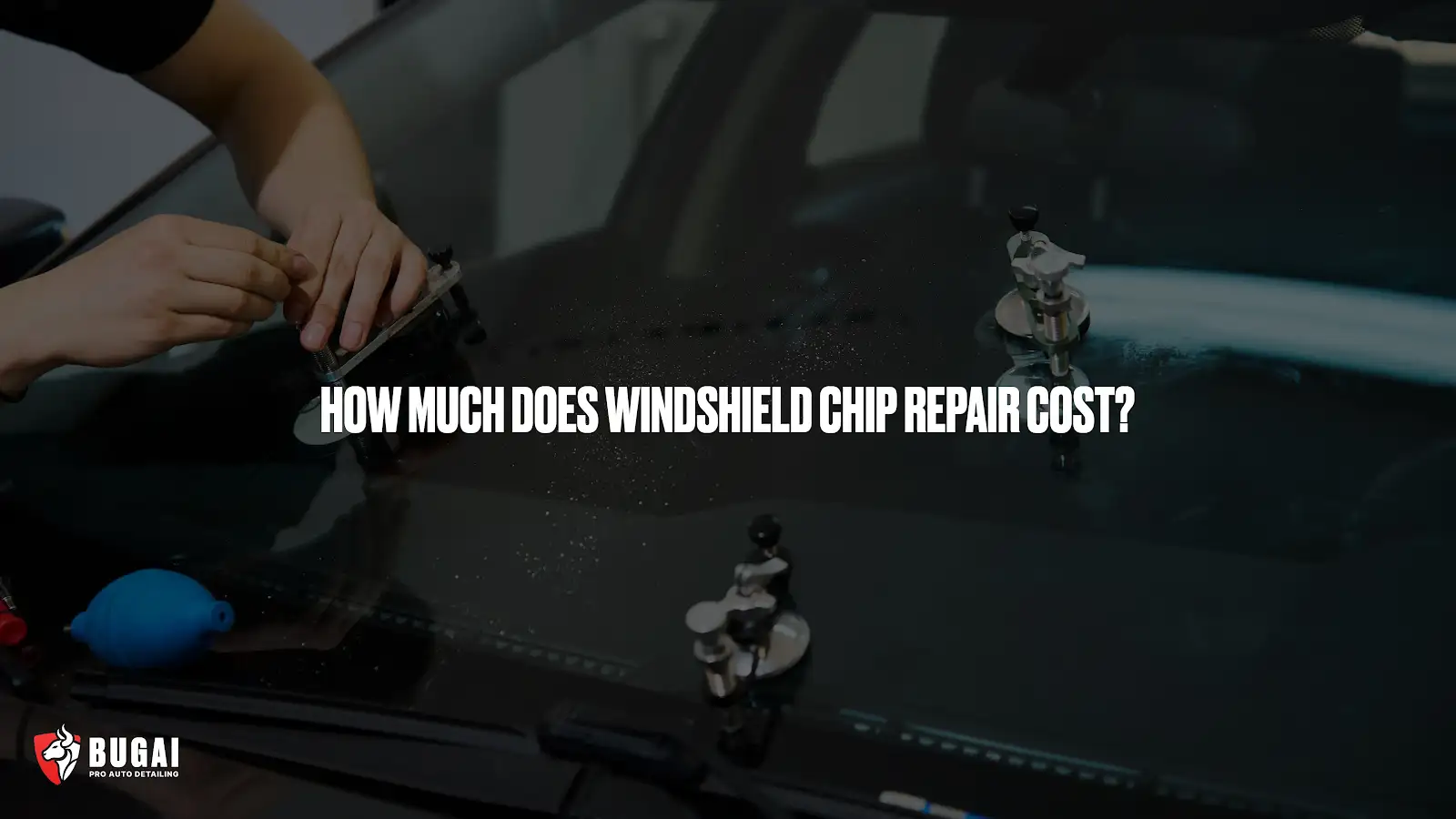
Windshield chip repair cost depends on the damage size, type, and location, the service setting, and whether insurance applies.
Windshield repair is often covered under comprehensive insurance for non-collision damage, while collision coverage may apply after a crash; the deductible and glass provisions in the actual policy control what the customer pays.


