

.svg)
Car Wash vs. Car Detailing:
What Is the Difference?
A car wash removes routine surface dirt, while detailing performs deeper cleaning, targeted restoration, and protection work.

A car wash and a professional detail can both make a vehicle look cleaner, but they solve different problems. One is routine maintenance; the other is a more deliberate process built around the vehicle's condition, materials, defects, and protection needs. That distinction matters when you are deciding how much time to reserve, what result to expect, and whether a low headline price is actually comparable with a detailed service quote.
What is the main difference between a car wash and detailing?
The main difference is scope: a car wash removes routine surface dirt, while detailing performs deeper cleaning, targeted restoration, and protection work. A wash is usually designed to move many vehicles through a repeatable exterior-cleaning process. Detailing begins with closer inspection and addresses more surfaces, more material types, and more condition-specific problems.
The International Detailing Association defines detailing as a systematic process that helps maintain, restore, and protect a vehicle's surfaces. That definition is useful because it separates detailing from the simple act of putting soap and water on a car. A detailer considers how paint, glass, wheels, plastics, upholstery, leather, carpets, and trim should be cleaned without creating avoidable damage. Depending on the selected service, the work may also include bonded-contaminant removal, stain extraction, light paint enhancement, or a protective product.
The words are sometimes blurred in marketing. A premium hand wash may include careful wheels, drying, and a spray protectant, while an entry-level detail may be fairly limited. The service name alone is not proof of the scope. Ask for a written list of tasks, including what happens inside the cabin, whether paint is decontaminated, whether any defects are addressed, and what protection is applied.
For vehicle owners in the Sacramento area, BGI Pro Auto Detailing's automotive detailing page provides a relevant starting point when the vehicle needs more than a maintenance wash. A condition-based conversation is especially important when there are stains, odors, bonded contamination, dull paint, or protection that needs renewal.
What does a standard car wash include?
A standard car wash generally includes exterior washing and rinsing, with some form of drying. The exact method depends on whether the service is automatic, self-service, touchless, or performed by hand. Wheels may receive a quick cleaning, and some packages add underbody rinsing, tire dressing, or a short-lived surface protectant. Interior cleaning, stain removal, paint correction, and detailed crevice work are usually outside the basic scope.
Automatic systems are built for speed and consistency, not for diagnosing a particular vehicle. They do not normally pause because one panel has tree sap, one wheel has heavy brake dust, or an edge of paint-protection film needs cautious handling. A self-service bay offers more control, but the result depends on the driver's technique and the condition of shared tools. A hand wash can be gentler and more thorough, yet it is still a wash unless the service description adds detailing steps.
The safe-wash process also matters. Loose grit should be rinsed away before contact, wash media should be clean, and drying should minimize dragging contamination across the finish. A vehicle covered in mud, sand, or road film carries more scratch risk than one with light dust. Existing swirls do not prove that one particular wash caused them, but repeated poor contact methods can accumulate visible marring.
Think of a standard wash as surface maintenance. It is appropriate for removing recent environmental dirt and keeping a previously corrected or protected vehicle presentable. It does not normally clean every badge edge, door jamb, carpet fiber, air vent, seat seam, or bonded particle on the paint. If those details define the result you want, the requested service has moved beyond a standard wash.
What does professional car detailing include?
Professional detailing includes a selected combination of inspection, exterior decontamination, material-specific interior cleaning, appearance improvement, and protection. It can be exterior-only, interior-only, or a full service. Package names vary considerably, so the written scope should identify both the included steps and the items that require an upgrade.
An exterior detail usually starts with a careful wash, but it continues where a normal wash stops. Embedded contamination may be chemically dissolved or mechanically removed so the paint feels smoother. The technician can then evaluate whether the finish needs only protection, a light enhancement, or true correction. Those are different operations: a wax or sealant adds a sacrificial layer, while abrasive polishing can remove or reduce certain defects by refining the clear coat.
Interior detailing is also more than vacuuming visible areas. It may involve brushes, compressed air, extraction equipment, steam used appropriately, and products selected for cloth, leather, vinyl, plastic, carpet, glass, or suede-like materials. Delicate headliners, screens, coated leather, and piano-black trim require restraint. A strong chemical or aggressive brush is not automatically "more professional"; technique and material compatibility are more important.
Protection completes many detailing packages, but the term can mean very different products. A spray sealant, wax, ceramic coating, and paint-protection film do not offer the same durability or physical protection. Ask exactly what is being applied and whether preparation is included. BGI Pro Auto Detailing lists detailing alongside services such as ceramic paint protection and paint-protection film, which allows those scopes to be discussed separately instead of being treated as interchangeable add-ons.
How do car wash and detailing results compare?
A car wash should leave the visible exterior free of routine loose dirt. A detail should produce a more complete, condition-specific result: cleaner crevices, better-treated materials, smoother decontaminated paint when included, improved interior soil removal, and protection selected for the owner's goals. Detailing may also improve gloss or reduce defects when polishing is part of the scope, whereas a wash does not remove paint defects.
"Cleaner" and "corrected" are not the same result. After a wash, gloss may improve simply because the dirt film is gone. If swirls, oxidation, etching, or sanding marks are present, washing cannot level the finish. Conversely, not every detail includes machine polishing. A full interior-and-exterior cleaning package may make the vehicle much more presentable while leaving paint defects unchanged. This is why before-and-after expectations should be linked to documented steps.
The same logic applies inside. A quick vacuum can collect loose crumbs, but it may not release sand embedded deep in carpet, remove a set-in spill, or neutralize an odor source. Extraction can improve many textiles, yet drying time becomes part of the result. Leather or delicate trim may need a different product and less moisture. Some stains, dyes, burns, wear, and material deterioration cannot be cleaned away safely.
Longevity also depends on maintenance after the appointment. A detailed vehicle driven through a dusty commute and parked outdoors will become dirty again. A corrected finish can acquire new swirls from poor washing. Professional detailing creates a better baseline; it does not suspend normal wear. The most useful comparison is therefore result plus maintenance plan, not an isolated photograph taken immediately after service.
How much time does a car wash take compared with detailing?
A car wash is usually measured in minutes, while professional detailing is usually measured in hours. As planning estimates, an automated wash may take roughly 5-15 minutes once the vehicle enters the process, while a basic hand wash may require about 30-90 minutes. A focused interior or exterior detail can take approximately 1.5-3 hours, a full detail often takes 3-6 hours, and paint correction or coating preparation may require most of a day or longer. Queue time, inspection, drying, and curing are separate from hands-on labor.
These are not appointment guarantees. The International Detailing Association consumer guide gives a useful order of magnitude: about one hour for a basic wash-and-wax service, roughly four to five hours for a full detail, and eight to twelve hours or more for correction and coating work. A current 2026 detailing-time guide reports similar broad bands for focused and full-detail services. The overlap is wide because two vehicles of the same model can arrive in very different condition.
Active labor is only one part of the calendar. Upholstery extraction requires moisture management and drying. A sealant or ceramic product may have a dwell or cure window. A shop may need to keep the vehicle indoors during that period even after application is complete. Mobile service can add setup and breakdown time, while a controlled shop environment may reduce weather interruptions.
Ask for two times, not one: the expected hands-on service window and the realistic pickup or reuse time. If you need the car for school pickup, a flight, or work, tell the provider before the appointment. A condition review can then reveal whether the desired result fits the available window or whether the service should be reduced, rescheduled, or divided into stages.
How do the costs of a car wash and detailing differ?
A car wash generally costs less because it uses a narrower, faster, and more standardized process. Detailing costs more because the service includes inspection, more labor per vehicle, specialized chemicals and tools, material-specific techniques, and sometimes restoration or protection steps. The price gap reflects a scope gap, so comparing the two only by the number on a menu is misleading.
Current national detailing benchmarks illustrate the scale of professional work. TopDetailers' August 2026 dataset, based on more than 20,000 posted prices from over 2,200 U.S. detailing businesses, reports a median of about $199 for an interior detail, $190 for an exterior detail, and $260 for a full detail. Its observed full-detail band is approximately $175-$350. These are national market benchmarks, not BGI prices, and an individual estimate can fall outside them because of vehicle size, condition, location, and selected work.
Detailing prices may be presented as packages, labor rates, or inspection-based custom quotes. Jobber's April 2026 pricing guide reports common customer-facing labor rates around $50-$100 per hour, but dividing a package price by an estimated time does not show the whole value. Equipment, product cost, shop overhead, insurance, training, rework risk, and cure or drying management are part of professional delivery. More importantly, a lower quote may omit the task you actually need.
Compare these elements before deciding that one provider is cheaper:
- interior, exterior, or both;
- vehicle-size allowance and condition surcharges;
- wheels, door jambs, glass, mats, crevices, and trunk or cargo area;
- extraction, pet-hair work, odor treatment, and stain limitations;
- chemical or mechanical paint decontamination;
- machine polishing and the stated correction goal;
- the exact protection product and preparation;
- mobile travel, shop drop-off, tax, and optional add-ons.
A maintenance wash and a full detail are both valid purchases when matched to the right condition. The expensive mistake is paying for one while expecting the other.
Can an automatic car wash damage paint or protection?
An automatic wash can create risk, but it is inaccurate to say that every automatic wash will damage every vehicle. Risk depends on the equipment, maintenance, chemistry, existing contamination, paint condition, and any applied coating or film. Brush or cloth contact can move abrasive grit across the finish. Touchless systems remove that contact but may rely on stronger chemistry and pressure, which can still be unsuitable for certain surfaces or protection systems.
Vehicle-manufacturer guidance supports a conditional approach. Tesla's current owner guidance tells owners to use touchless washing and avoid brushes when using an automatic wash. A Toyota owner-manual example similarly warns that automatic-wash brushes can scratch the surface and affect paint. Those warnings do not prove that visible damage is inevitable; they show that the vehicle manufacturer's care instructions should outrank a generic assumption.
Protection changes the decision but does not make the surface invulnerable:
- Wax or sealant: aggressive detergents may shorten its useful life.
- Ceramic coating: it can improve chemical resistance and ease of cleaning, but contact can still create marring in the underlying clear coat.
- Paint-protection film: the film is designed to take abuse that would otherwise reach paint, yet high pressure near lifted edges, harsh chemistry, or neglected seams may create problems.
- Matte or satin finishes: products that add gloss or abrasive contact may change the intended appearance.
Before choosing a wash, review the owner's manual and the aftercare instructions for any coating, wrap, or film. Inspect the vehicle for loose trim, damaged paint, chipped glass, lifted film edges, or open-body repairs. Pre-rinse heavy mud and grit. If using a self-service bay, avoid shared brushes whose history is unknown, and keep pressure-washer nozzles at a safe distance from vulnerable edges.
For a recently corrected, coated, or filmed vehicle, ask the installer what maintenance method is compatible with the product. The cautious conclusion is not "never use an automatic wash." It is use a method that matches the vehicle, the protection system, and the level of contamination.
When is a car wash the right choice?
A car wash is the right choice when the vehicle is fundamentally in good condition and the goal is routine removal of light-to-moderate exterior dirt. It is especially useful between professional detailing appointments, after rain or road dust, and before contamination is allowed to build into a difficult film. Frequent safe washing can support paint preservation because environmental material is removed before it remains on the surface for long periods.
Good car-wash scenarios include:
- a maintained daily driver with no significant stains, odors, or bonded contamination;
- a coated or sealed vehicle whose installer has approved the wash method;
- removal of recent dust, pollen, light road film, or winter residue;
- a quick appearance reset before an ordinary errand or meeting;
- maintenance after a full detail, using compatible products and clean tools.
Method still matters. If the vehicle carries heavy mud or sand, rushing straight into contact increases abrasion risk. If the paint-protection film has a lifted edge or the finish is matte, manufacturer and installer instructions should guide the process. When washing by hand, separate clean wash media from wheel tools, rinse before contact, and dry with clean, appropriate towels or controlled air. Those steps are not a full detail, but they help prevent maintenance from undoing previous professional work.
A wash is less suitable when the desired result depends on inspection or correction. Water spots that have etched into the finish, rough bonded contamination, dull oxidized paint, set-in interior spills, smoke odor, and deep pet-hair accumulation will not be solved by a standard exterior cycle. Choosing repeated washes in those situations may keep the main panels superficially clean while the underlying problem remains.
Use a simple test: after routine dirt is removed, are you satisfied with the paint feel, gloss, crevices, cabin, and protection? If yes, the maintenance wash has done its job. If not, do not keep buying increasingly elaborate wash upgrades without confirming their tasks. Request a detailing inspection and match the service to the unresolved condition.
When is professional detailing the better choice?
Professional detailing is the better choice when the vehicle needs more than routine surface cleaning, or when the owner wants a documented preparation and protection process. Common triggers include sale preparation, a heavily used family cabin, pet hair, set-in spills, persistent odors, rough paint, road tar or sap, dullness, visible swirls, or protection that no longer performs as expected.
Detailing is also appropriate when surfaces require different methods. A vehicle can contain coated leather, cloth, delicate screens, soft piano-black trim, suede-like materials, textured plastics, chrome, painted wheels, glass, rubber, clear coat, and protection film. Applying one strong cleaner everywhere is not efficient or safe. A detailer evaluates each surface and chooses a process that balances cleaning ability with material preservation.
Consider professional service for these goals:
- Preparing for sale or lease return: improve presentation and identify defects that cleaning cannot repair.
- Resetting a neglected interior: remove accumulated debris, address stains, and assess odor sources.
- Decontaminating paint: remove bonded material before applying protection.
- Improving gloss or defects: evaluate whether paint enhancement or correction is appropriate.
- Renewing protection: prepare the surface for wax, sealant, ceramic coating, or PPF.
- Protecting a specialty vehicle: plan methods around delicate finishes, unusual materials, or limited access.
Some problems still sit outside ordinary detailing. Mold contamination, bodily fluids, pest waste, failing clear coat, deep chips, corrosion, torn upholstery, and mechanical faults may require remediation, upholstery repair, body work, or another qualified specialist. A responsible estimate should state those boundaries rather than promise that every mark or odor will disappear.
Tell the detailer the outcome you care about, not just the package name. "I need the cabin safe and presentable after a spill," "I want to prepare the paint for a coating," and "I plan to sell the vehicle" lead to more useful scopes than "give me the best detail." The closer the requested process matches the real goal, the easier it is to compare time, cost, and expected improvement.
What is the bottom line in the car wash vs. detailing decision?
The bottom line is simple: choose a car wash for regular surface maintenance and professional detailing for deeper cleaning, condition improvement, or protection. Neither service is universally better. The right choice depends on what is on the vehicle, which surfaces are affected, the result you expect, and how much time the work requires.
Read the service description instead of relying on labels. Confirm the interior and exterior tasks, the treatment of difficult contamination, whether polishing is included, the exact protection product, realistic limitations, pickup timing, and aftercare. That written scope is the fairest basis for comparing providers.
When the vehicle needs more than a maintenance wash, BGI can inspect its condition and help define an appropriate detailing scope without pretending that a national benchmark is a local quote. Photos can begin the conversation, but difficult stains, paint defects, delicate materials, or protection concerns may require an in-person assessment.
After the larger reset is complete, ask for a maintenance plan that protects the investment. It should identify a compatible wash method, products to avoid, safe drying, and signs that decontamination or protection renewal is due. That approach keeps inexpensive routine washing in its proper role and reserves professional detailing time for work that actually requires deeper tools, inspection, and technique.
Security film can delay entry and increase the effort or noise required, but it cannot guarantee that a determined intruder will never create an opening.
A written inspection-based estimate is more reliable than a single advertised average.
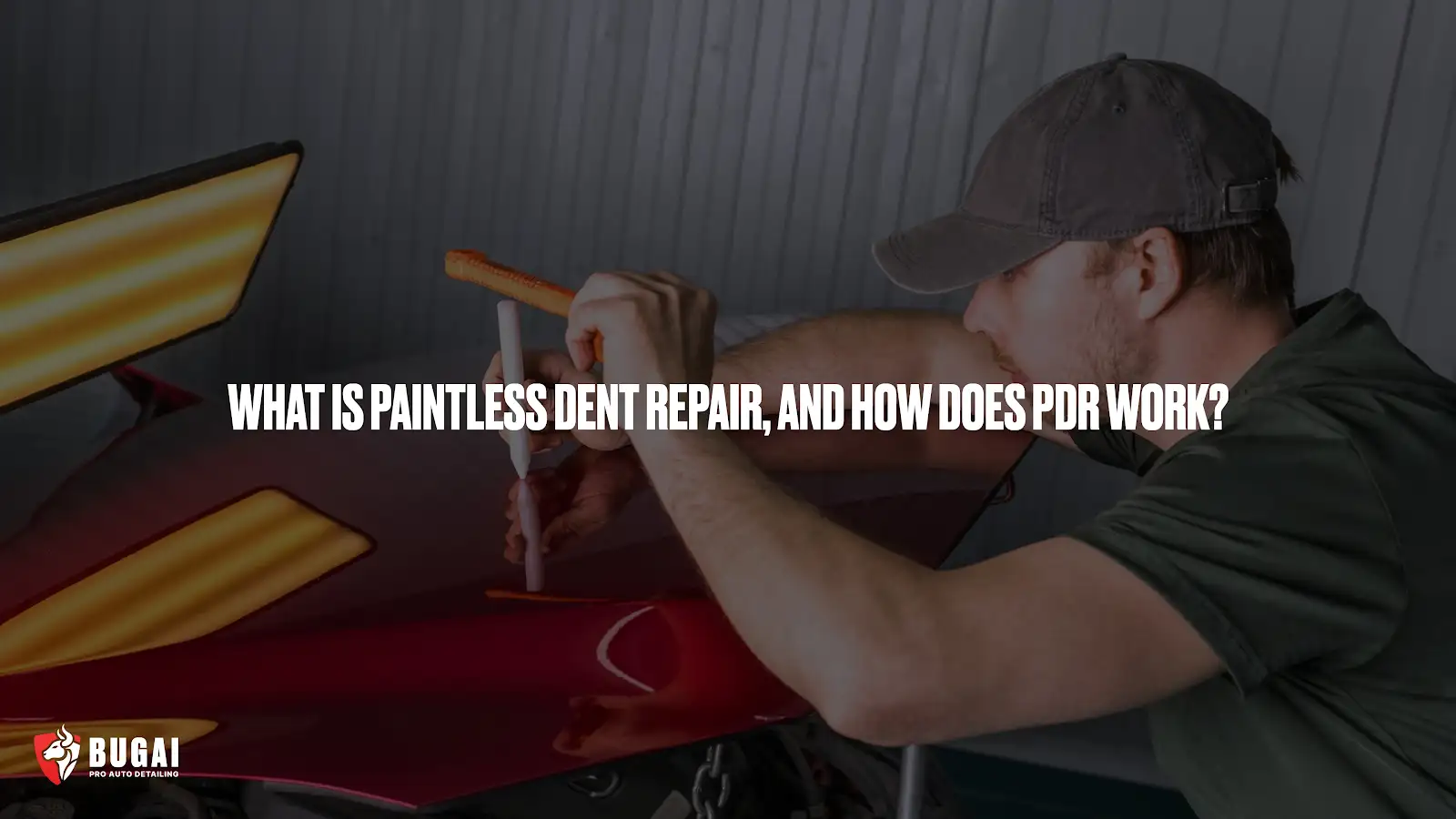
Paintless dent repair, or PDR, is a method of reshaping a dented metal panel without conventional body filler and repainting when the existing finish remains suitable.


